Two out of five European laying hens are in-ovo sexed
Almost four years ago, the Genus Focus for in-ovo sexing was installed at the first European hatchery. This year, 40% of the EU's commercial layer flock were in-ovo sexed, which represents a six point increase in just twelve months, according to research from independent research group Innovate Animal Ag.
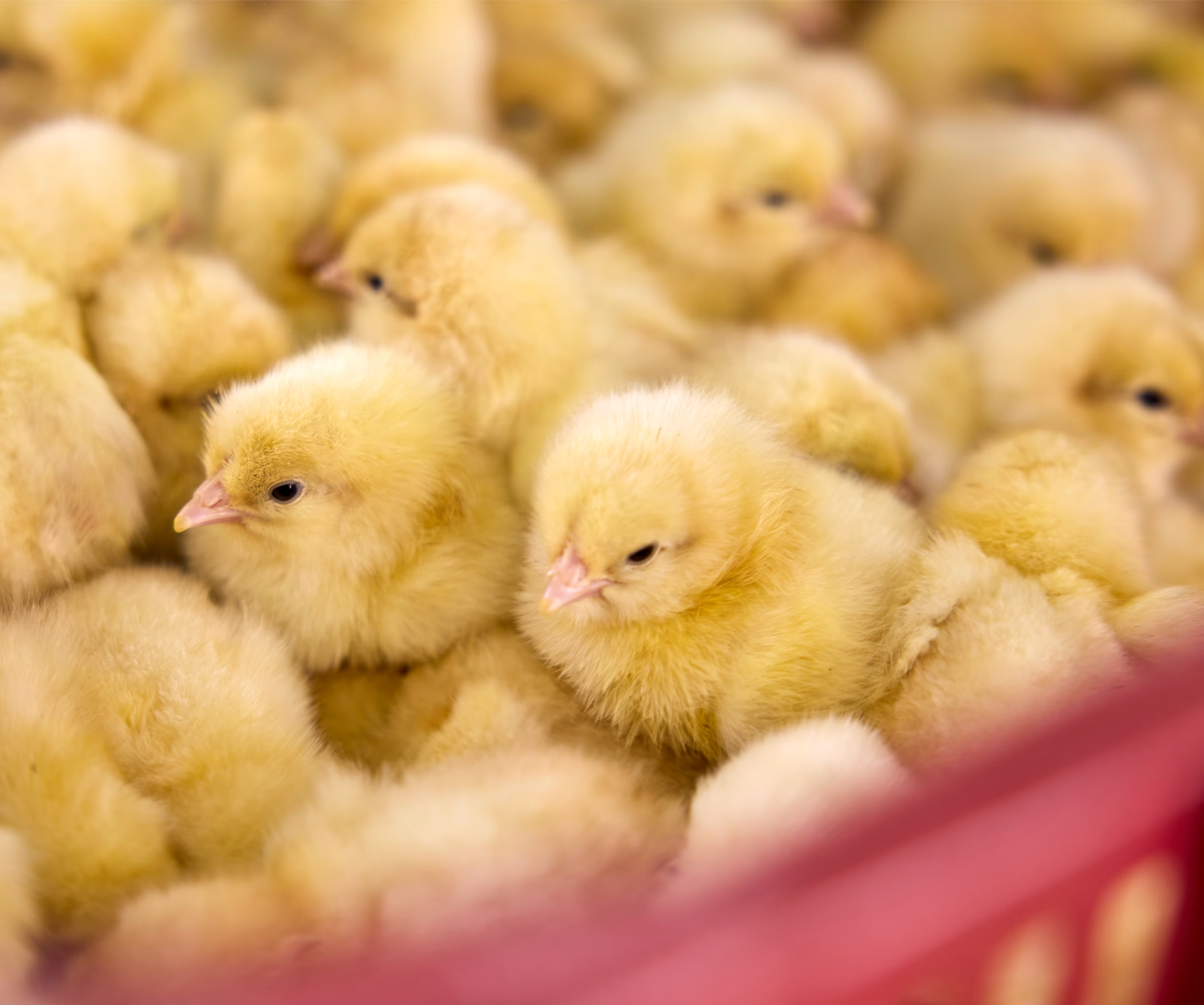
Before viable in-ovo sexing solutions like Orbem’s Genus Focus entered the market, hatcheries were forced to cull millions of day-old male chicks every year to keep up with the ever-growing demand for affordable protein. Now that mature, field-proven solutions are available and operate at scale, the egg industry has a real, animal-friendly alternative to chick culling and in-ovo sexing is quickly becoming the global standard.
In Europe, regulation is still a major adoption driver (although not the only one). In 2022, Germany and France became the first countries to ban chick culling. The Netherlands is busy phasing it out and Italy’s ban is coming into force on January 1, 2027. An EU-wide legislation is on the horizon: The European Commission intends to make a proposal by the end of 2026, as stated in the new EU Livestock Strategy released in July this year.
Regulatory pressure is not the only driver of in-ovo sexing
Two European countries have adopted in-ovo sexing without any regulatory pressure: Switzerland and Norway. In both countries, eggs produced by in-ovo sexed hens are gaining market share quickly.
In Switzerland, where two hatcheries cover the demand of an entire market and both installed the Genus Focus, the market penetration of in-ovo sexed laying hens has reached roughly 93%.
Switzerland is a small, concentrated market where the entire supply chain was able to agree on a way forward. Norway’s story is somewhat similar, although no supply chain agreement preceded the two hatcheries’ moves toward in-ovo sexing there. In July, Norway saw a 52% market penetration of in-ovo sexed hens. Chick culling is supposed to be phased out in Norway over the course of a year, completely ending the practice in the first Nordic country to adopt in-ovo sexing by July 2027.
One thing has become clear: when hatcheries adopt in-ovo sexing without being forced to, entire supply chains can implement it on their own terms. For hatcheries in a market with no ban, the question is no longer if that market shifts to in-ovo sexing. It is whether they shape that shift or get pulled into it on someone else's timeline.
In-ovo sexing is on the rise in the U.S. and Latin America
Outside Europe, in-ovo sexing is similarly gaining traction without immediate regulatory pressure. The Genus Focus is operational in two U.S. hatcheries, proving the technology performs in the world's largest table-egg market, with the second installation becoming operational recently at a hatchery in Iowa. As in Europe's non-regulated markets, adoption here will be retail- and consumer-led. Once a major buyer commits to sourcing in-ovo sexed eggs at scale, the rest of the supply chain follows. That commercial tipping point in the US is still ahead of us, but the infrastructure to meet it is already in place.
In Latin America, in-ovo sexing is becoming a reality too. Brazil is an early-stage market for in-ovo sexing. Industry conversations are underway, and the country has held its first dedicated industry forum this year, bringing hatcheries, egg producers, and legislators together to discuss the path forward.
How a field-proven, mature solution is enabling the transition to ethically produced eggs
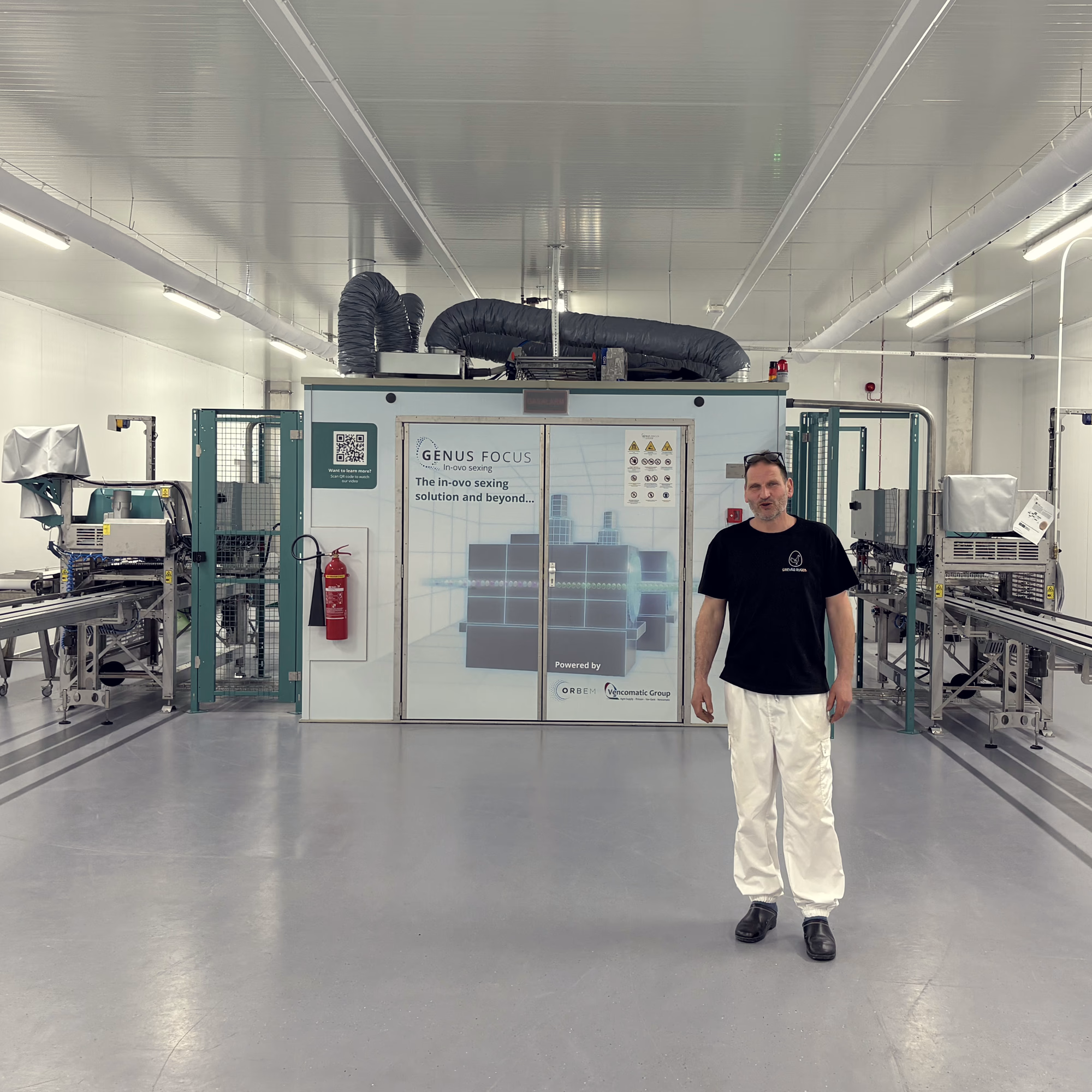
Switching to in-ovo sexing is only realistic if the solution integrates smoothly into a hatchery’s production environment. The Genus Focus has been doing just that since 2023.
Almost 250 million eggs have been scanned to date, and annual volume has doubled in the past year, driven by wider adoption and system improvements. Orbem and Vencomatic Group’s Genus Focus is a mature, field-proven system working across 11 customers in six countries, in Europe and the U.S.
Combining MRI with AI to determine the sex of the embryo at day 11 or 12, the Genus Focus does not perforate the egg shell and has no impact on hatchability. The fully-automated, modular system (1-6 modules) analyzes each egg in under a second, at 99.5% accuracy, and at a throughput of 3000 eggs per hour per module.
With a base in Houston, Texas in addition to its German headquarters, the Orbem team services the U.S. market directly and provides 24/7 customer support to all customers. Learn more about how AI-powered MRI works here or access our latest Genus Focus White Paper.
Talk to us
Two out of five European laying hens are already in-ovo sexed, and the number grows every quarter. The question is no longer if a market will move to in-ovo sexing, but when, and on whose terms. We are here to talk about how hatcheries, egg producers, and retail can make the shift.
About the Author

Barbara Jilek, Senior PR and Content Marketing Manager
Barbara builds relationships with journalists and tells Orbem’s story on all our channels and anywhere else people will listen.