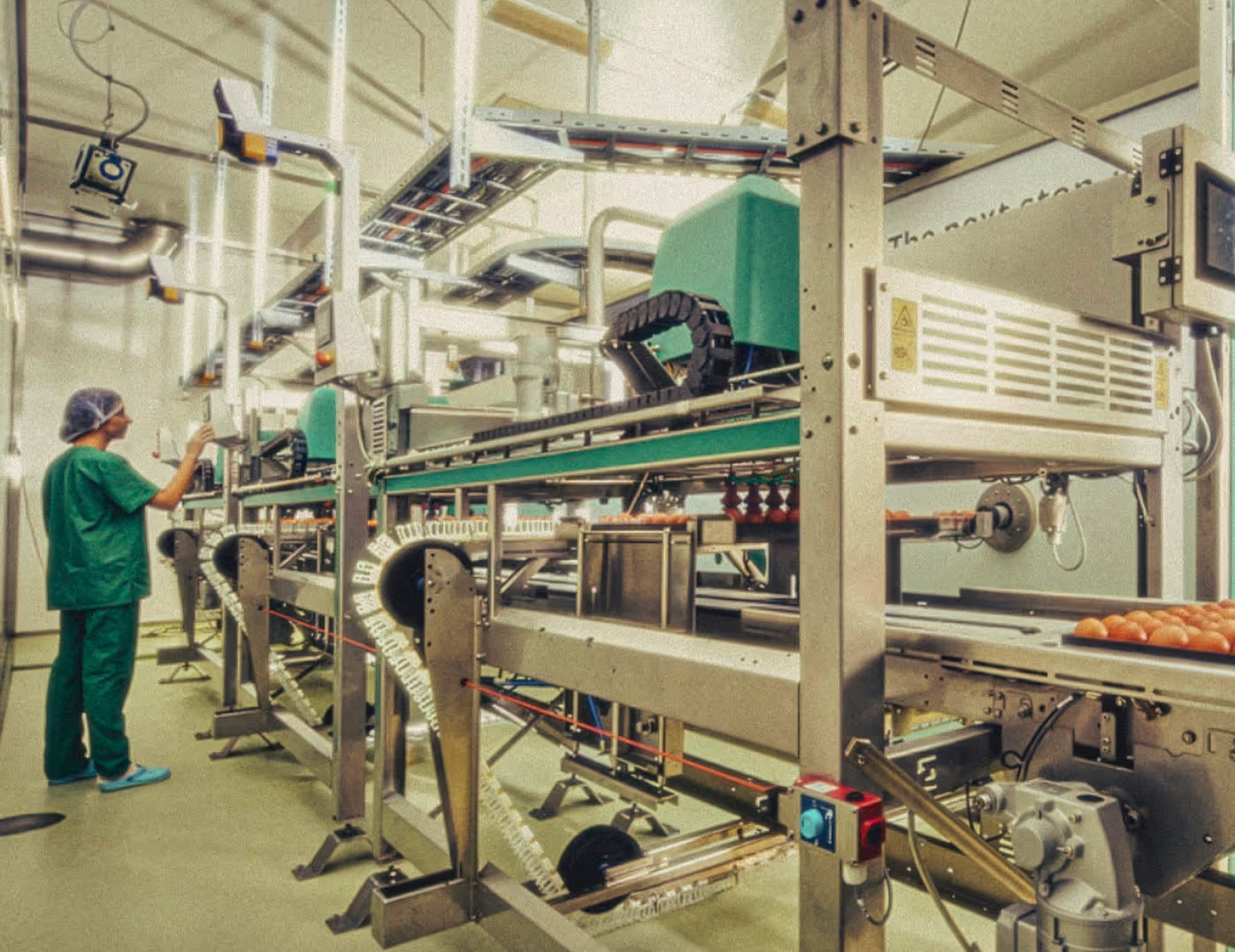
Tray filled with rows of brown eggs in a low-lit setting with a blurred dark background.

Incubate fertilized eggs only

Maximize hatching success by detecting fertilization status before incubation, freeing up to 20% more incubator capacity.

Unlocking the full potential of every egg

Remove unfertilized eggs before incubation and gain valuable insights to fine-tune your operations with the Genus Scale's precise fertilization detection.

graph pointing right up

Optimize fertilization rate

Accurately identify fertilized eggs to monitor breeder flock performance.

Hatching egg and upward arrow

Increase hatchability

Remove unfertilized eggs before incubation to maximize the percentage of successful hatches.

Expansion icon

Expand incubation capacity

Free up to 20% more incubation capacity by eliminating non-viable eggs

Warnign sign and downward arrow

Generate additional revenue & reduce risk

Sell unfertilized eggs, reduce waste, and minimize biosecurity risks from damaged eggs.

The hidden cost of unfertilized eggs

Incubating unfertilized eggs leads to more than waste and compensation fees - it disrupts hatcheries, slows operations, and impacts distribution centers.


DISTRIBUTION CENTERS

They face costly challenges, including wasted transportation, compensation to clients when fertility rates fall below expectations, and delays in flock replacements.

HATCHERIES

They experience reduced efficiency, increased labor for candling and breakout analysis, delayed flock performance data, and biosecurity risks from exploding eggs inside the incubator.

The powerful combination of MRI and AI

MRI sees inside. AI understands what it sees. Together, our AI and MRI translate complex biology into simple, actionable intelligence - non-invasively and at an industrial scale. This combination unlocks a new level of transparency in decision-making for a healthier, more sustainable world.

READ MORE ABOUT OUR TECHNOLOGY

Our partnership with the Vencomatic Group

Orbem provides the core AI-powered MRI imaging technology for non-invasive classification. The Vencomatic Group, with 40 years of expertise, integrates this technology into its advanced, industrial-scale hatchery automation equipment. Together, the Genus Scale provides a reliable, fully automated solution for real-time egg sorting and fertilization status detection.

Genus Focus in-ovo sexing for egg classification

Subscribe to our Genus Focus and Genus Scale newsletter

Stay updated on how AI-powered MRI is transforming the global poultry industry.

Relevant stories

The New EU Livestock Strategy wants to Future-Proof the Livestock Sector
Poultry
Company
17.07.2026

The New EU Livestock Strategy wants to Future-Proof the Livestock Sector

From Competitive Pressure to 2 Million Females a Year with the Genus Focus for In-Ovo Sexing
Poultry
28.04.2026

From Competitive Pressure to 2 Million Females a Year with the Genus Focus for In-Ovo Sexing

7 Technologies Redefining the US Hatchery in 2026
Poultry
24.03.2026

7 Technologies Redefining the US Hatchery in 2026

Transforming poultry production with inside-out intelligence

The sex of a hatching egg is only visible from inside the egg. We turn the inside out - revealing the sex with non-invasive AI-powered MRI at an industrial scale. 


Does the Genus Scale detect fertilization status on day 0, before incubation starts?
Pointing down arrow icon

Yes. The Genus Scale uses AI-powered MRI to detect the fertilization status of hatching eggs before incubation begins. Unlike candling at day 18 or early visual inspection at day 4–7, both of which require a period of incubation before detection is possible, MRI reads the internal biological structure of the egg directly, enabling classification before incubation starts.

What does pre-incubation fertilization detection save compared to candling at day 4–7 or day 18?
Pointing down arrow icon

The current industry standard, candling at day 18,  means 18 days of incubation energy, setter space, and labor have already been spent on eggs that will never hatch. Early candling at day 4–7 reduces this waste but still results in incubated biological waste under EU regulation.

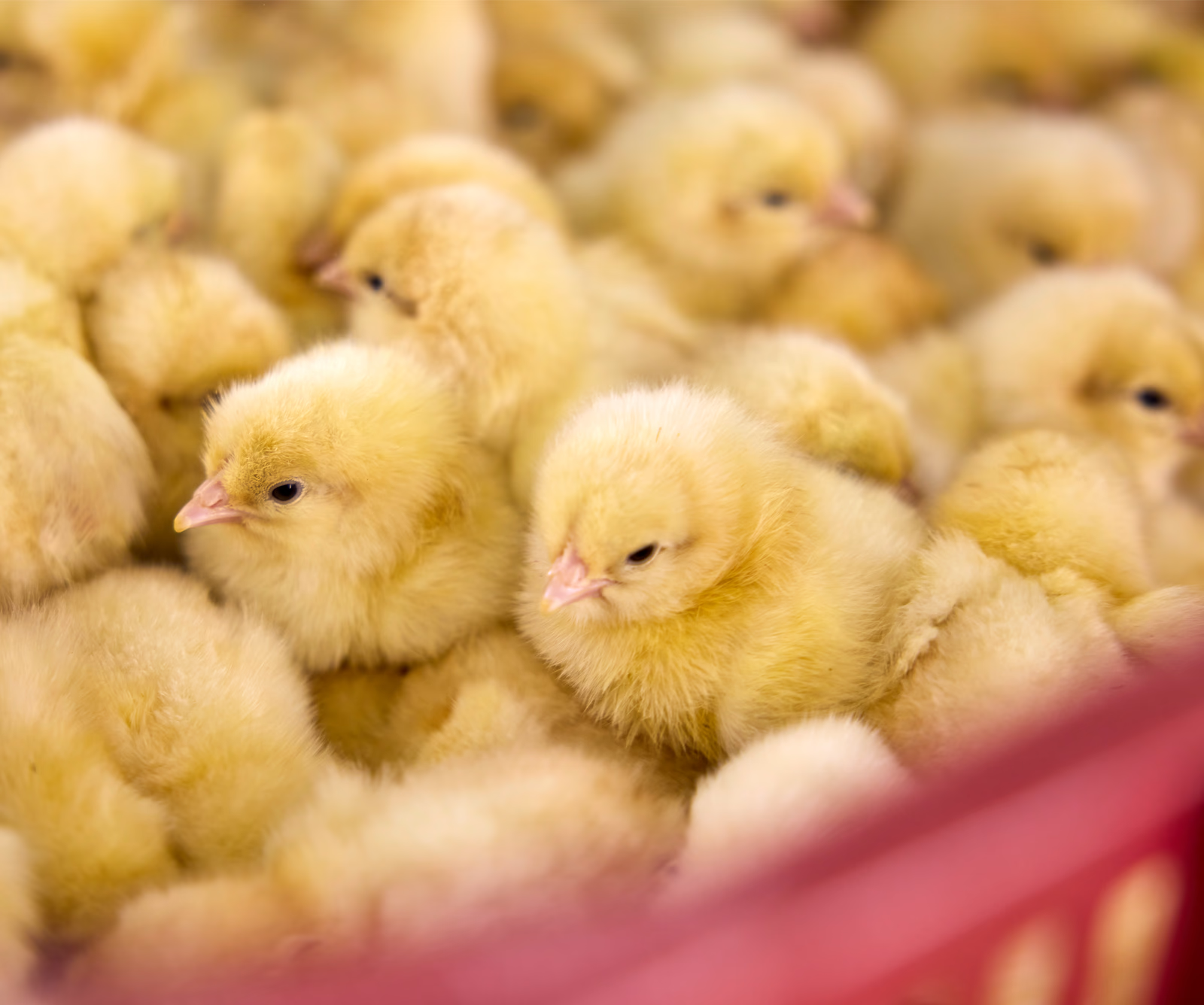
In broiler hatcheries, 8 to 20% of incubated hatching eggs are unfertilized. Pre-incubation fertilization detection at day 0 eliminates the incubation cost for unfertilized eggs. For hatcheries running at full capacity, this recovered space can be filled with additional fertile eggs, increasing total chick output without capital investment in new incubation infrastructure. Read more here.

Five coworkers gathered around a table in a modern office, engaged in a discussion while looking at a laptop screen.

Let’s create insight together

Connect with our team to explore how AI-powered MRI can transform your production from the inside out.