See what’s hidden inside

Revealing what is hidden underneath the surface

Inside-out intelligence for transparent quality control

Consistent quality across all batches

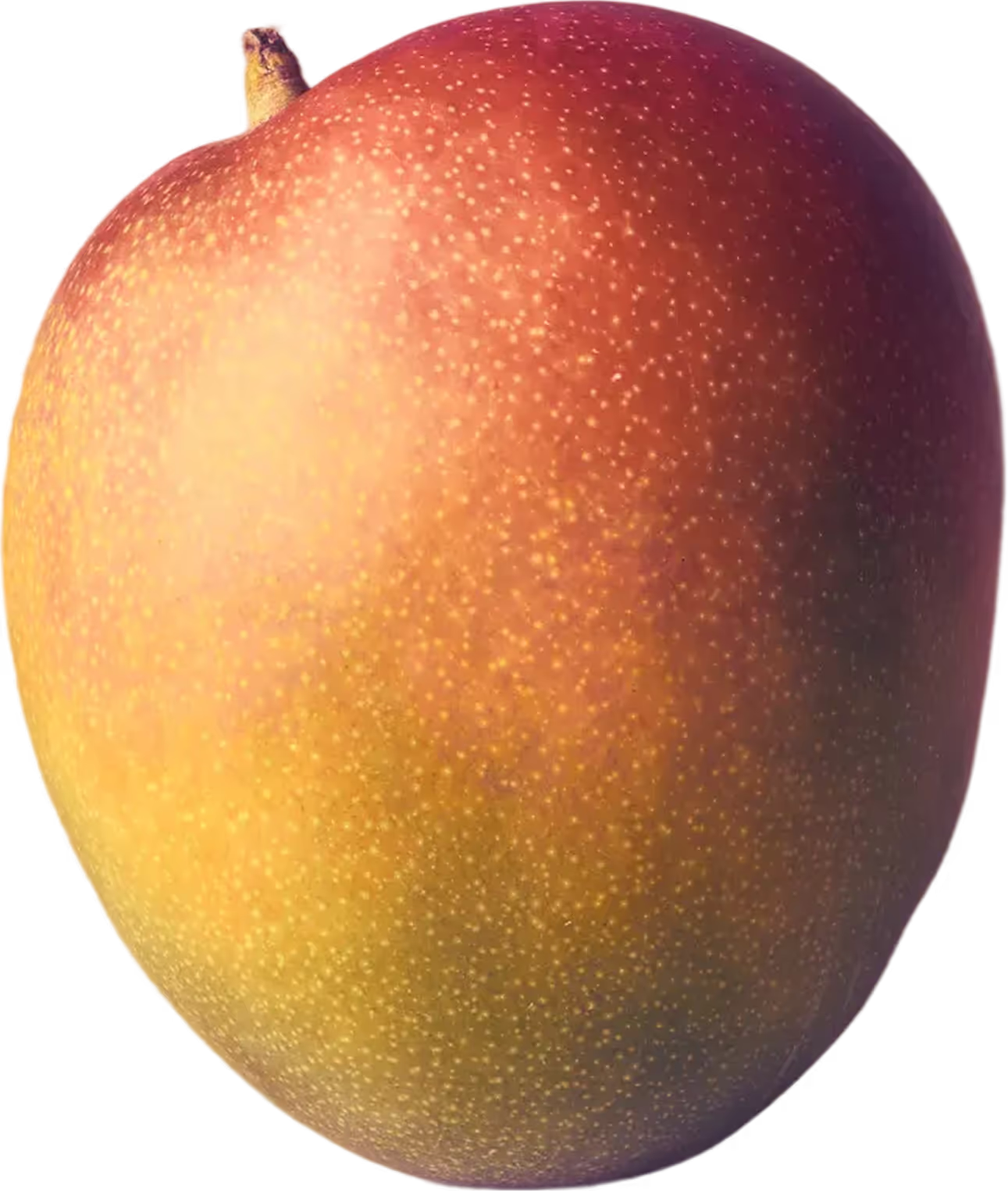
Picture mango no background
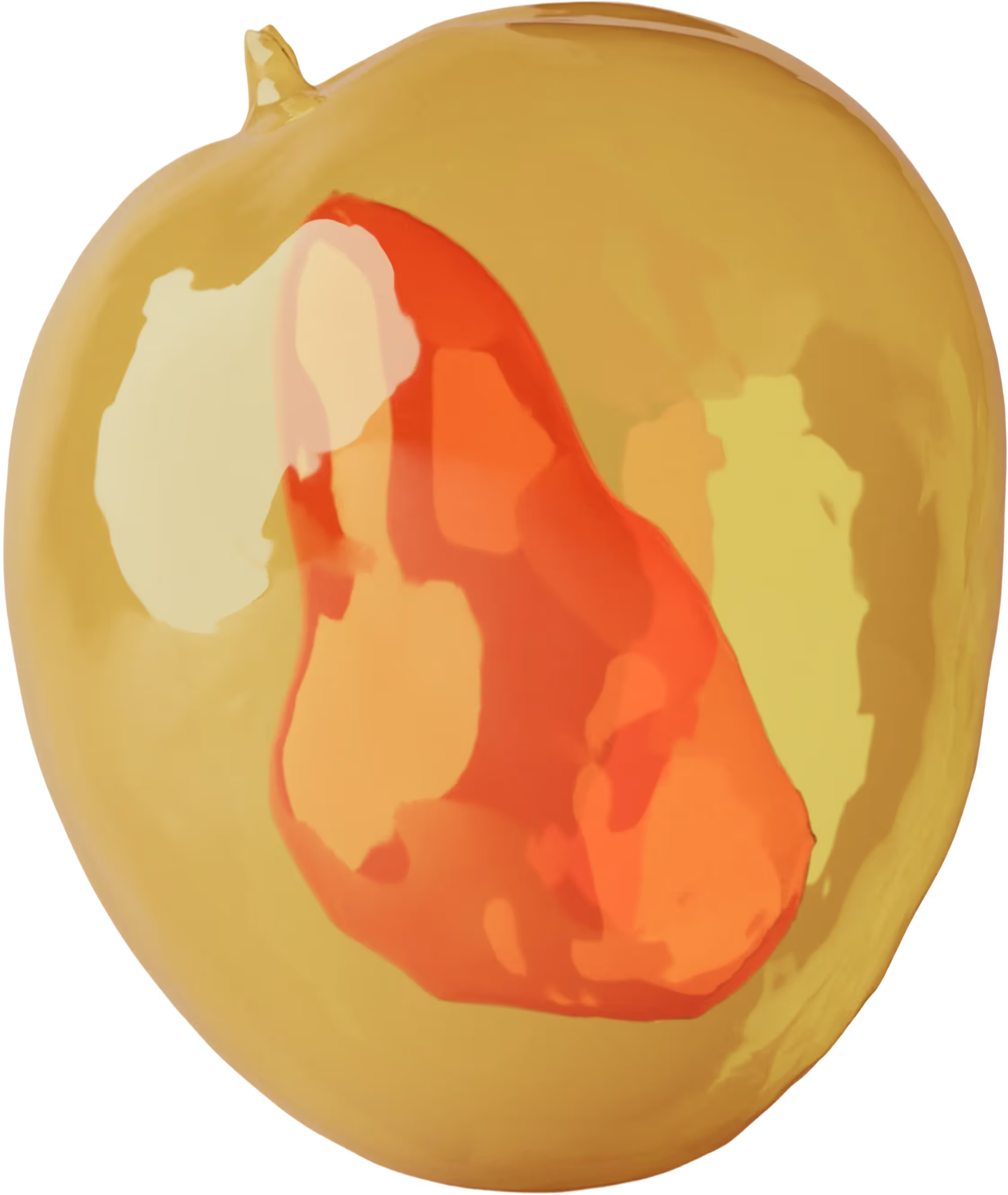
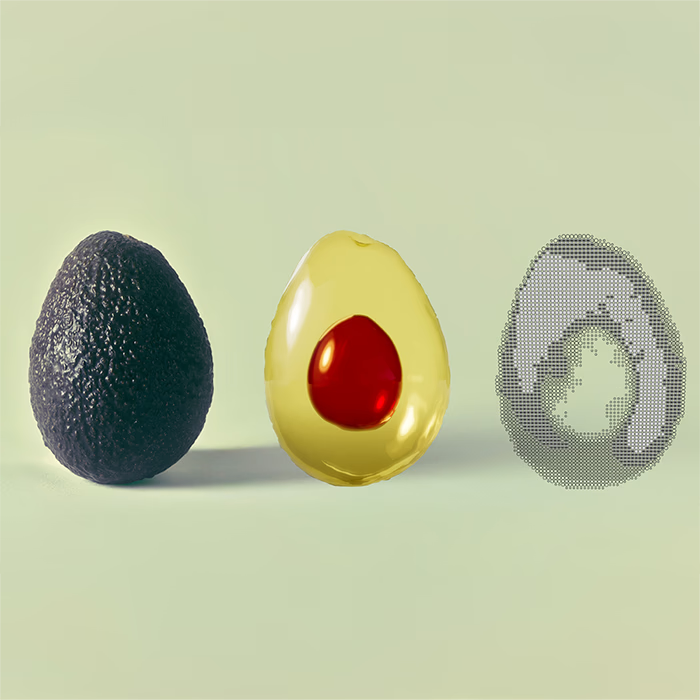
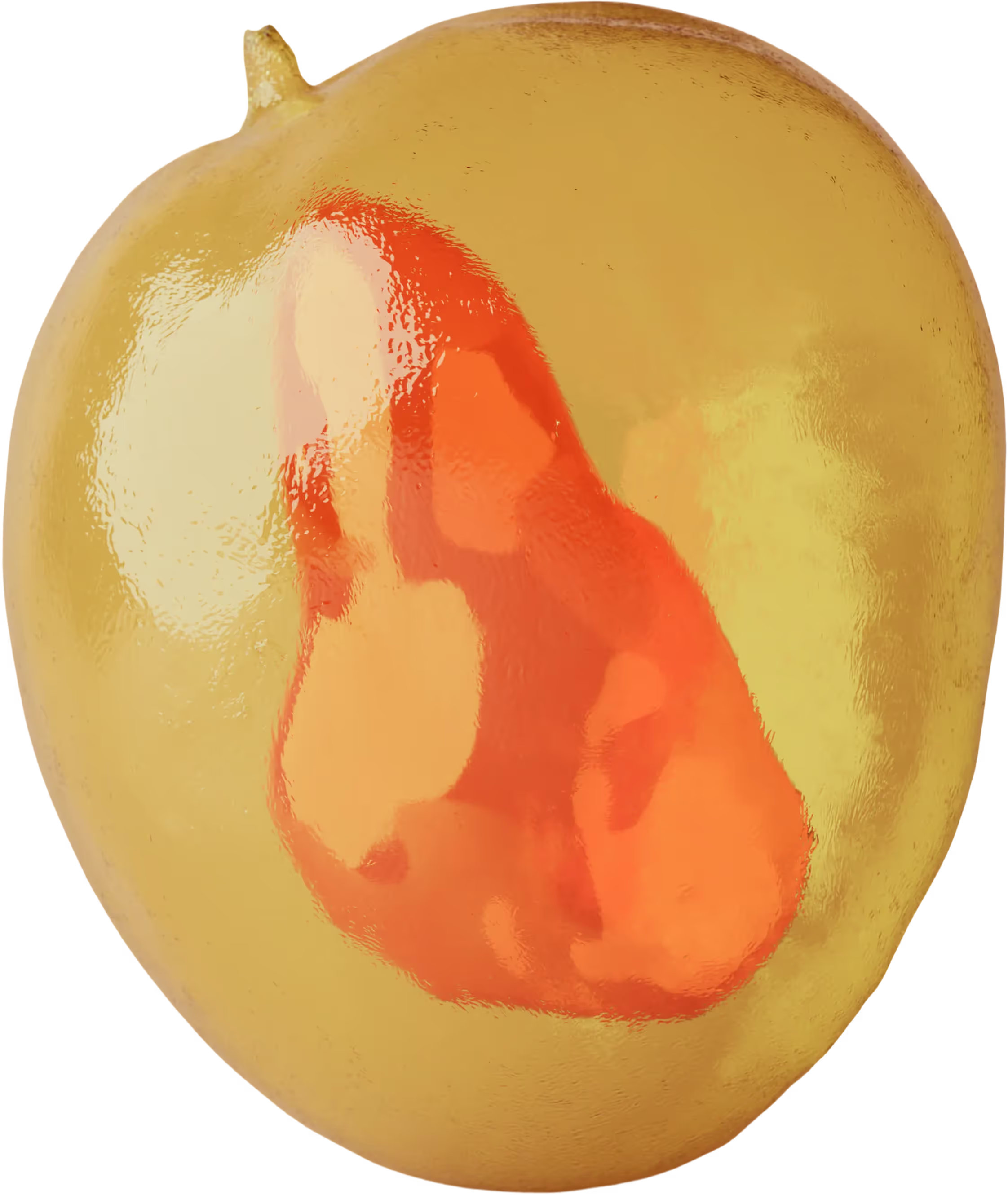
Mango 3d glass illustration
OBJECT
SCAN
DATA

The cost of hidden defects

Hidden defects have costly consequences. Every returned load, customer claim, and hour spent re-sorting costs money, damages your brand, and creates unnecessary food waste. Today's sorting methods only see surface-level (or a few mm beneath at most). They fail to detect key internal defects deep inside the fruit, often challenged by natural variations in fruit size, shape, or stone/pit location.

read tech comparison

Revolutionizing fruit quality control

Our AI-powered MRI detects hidden defects, ensures precise classification and grading, without damaging the fruit.

Tackling the global fresh produce waste challenge from the inside out

We are part of the solution to the global food waste challenge, where 1.25 billion tonnes are lost between harvest and retail. Our inside-out intelligence gives producers the power to assess internal fruit quality non-destructively.

star icon

Maximize quality & reduce waste

Ship fruit with confidence to prevent product claims, strengthen your market position, and extend shelf life by selecting fruit at optimal maturity.

Lock opened

Unlock new value streams

Instantly separate fruit with internal defects for juice or other products, ensuring nothing is wasted and unlocking new revenue.

Clock

Build a more efficient supply chain

Fully automate your operations, eliminate bad fruit from shipments to reduce returned loads and cut distribution costs.

Genus Echo first commercial installation with JimboFresh in Spain

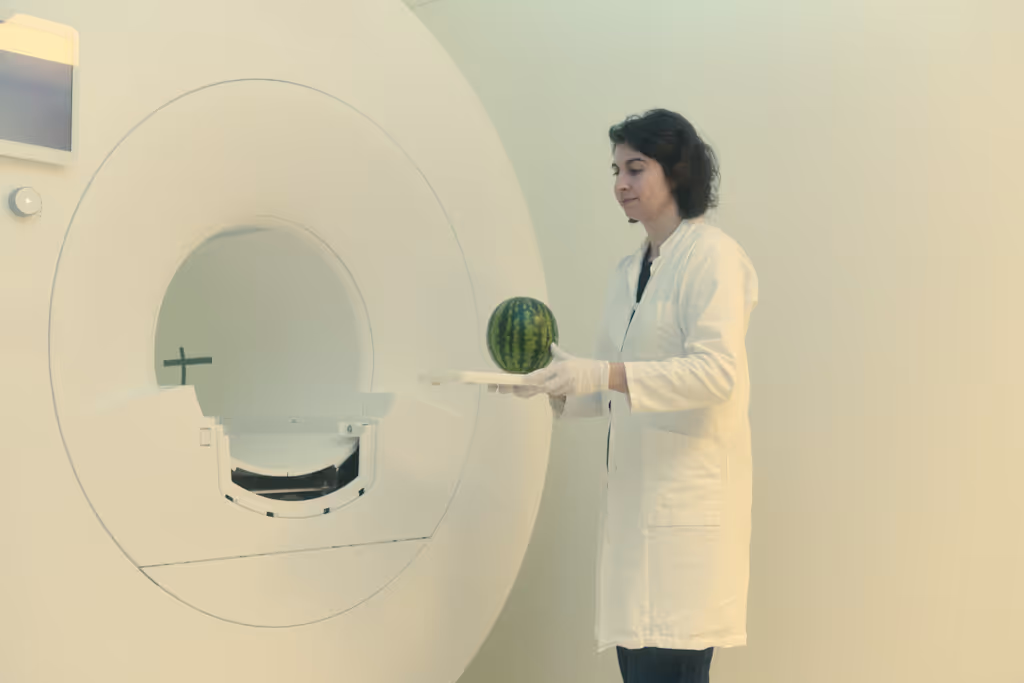
JimboFresh, a leading Spanish watermelon producer marketing over 38,000 tonnes annually under the Jimbee brand, is the first fresh produce company to deploy AI-powered MRI for internal quality control.

Genus Echo non destructive watermelon classification installation at Jimbo Fresh in Spain

Accelerated MRI for precise and consistent fruit quality control

reach out

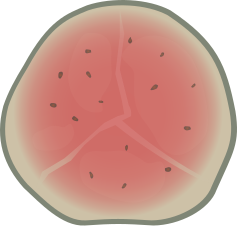
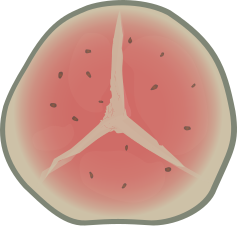
Watermelo illustration

WATERMELON

Normal State

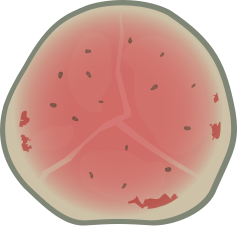
Watermelon hidden impacts vectorized illustration

WATERMELON

Hidden Impacts

Watermelon watermelon vector illustration

WATERMELON

Overmaturation

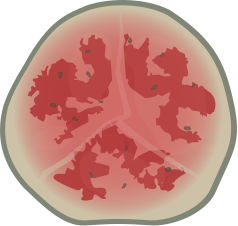
Watermelon hollow heart vectorized illustration

WATERMELON

Hollow Heart

Avocado vector illustration

avocado

Normal State

Avocado internal browning illustration vecotrized

avocado

Internal Browning

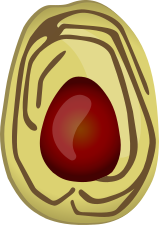
Illustration of a avocado vascular browning

avocado

Vascular Browning

Avocado bruising and mechanical damage vectorized illustration

avocado

Bruising and Mechanical Damage

Avocado rot internal defect illustration

avocado

Rot

Avocado cooling damage vectorized illustration

avocado

Cooling Damage

Avocado early germination  vectorized illustration

avocado

Early Germination

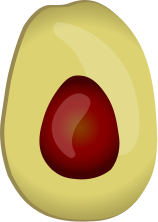
Mango vector illustration

mango

Normal State

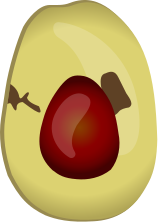
Mango internal browning illustration vectorized

mango

Internal Browning

Mango jelly seed defect illustration

mango

Jelly Seed

Mango soft nose defect illustration vector

mango

Soft Nose

Seamless integration, fully personalized grading

Our AI-powered MRI system adapts seamlessly within existing production lines. Our classification is customizable to specific quality standards, allowing reliable quality control from the inside out.

Genus Focus for in-ovo sexing automation machine close up
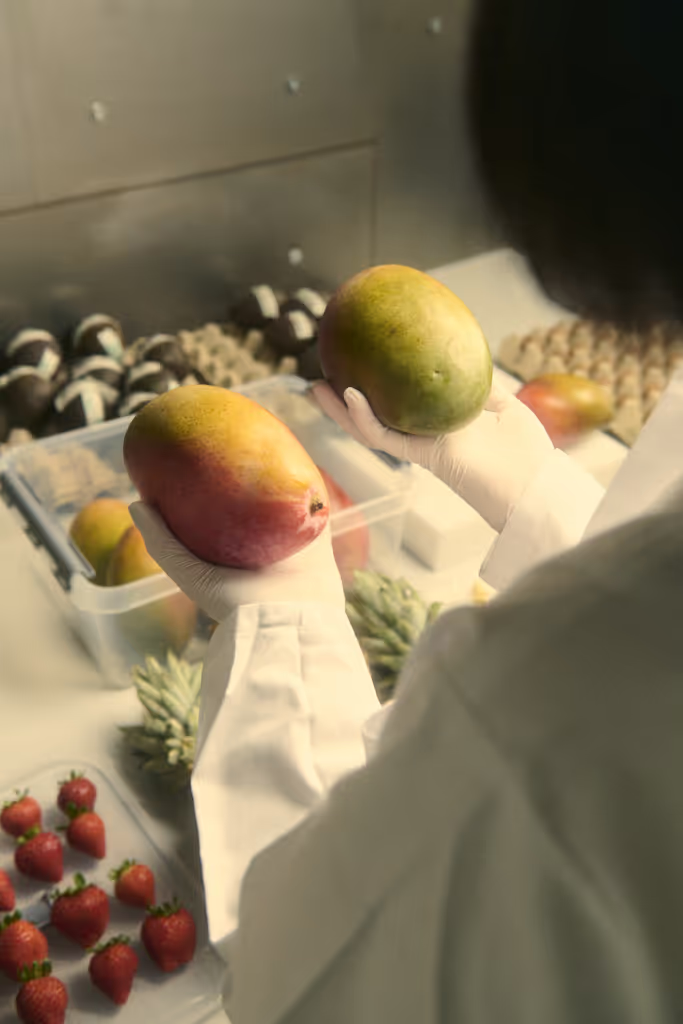
Person wearing white gloves holding two ripe mangoes in a laboratory setting with various fruits including strawberries and pineapples on the table.
Scientist in white lab coat holding a watermelon on a tray near a large MRI machine.

The powerful combination 
of MRI and AI

MRI sees inside. AI understands what it sees. Together, our AI and MRI translate complex biology into simple, actionable intelligence - non-invasively and at an industrial scale. This combination unlocks a new level of transparency in decision-making for a healthier, more sustainable world.

READ MORE ABOUT OUR TECHNOLOGY

Relevant stories

Comparing Available Technologies in Fruit Quality Control
Fruits
Company
16.02.2026

Comparing Available Technologies in Fruit Quality Control

MRI technology for further reducing waste and improving efficiency in avocado
Fruits
News
31.10.2025

MRI technology for further reducing waste and improving efficiency in avocado

Behind the Scenes of AI-Powered MRI
Poultry
22.12.2025

Behind the Scenes of AI-Powered MRI

Resource Hub

Browse and download our leaflets available in different languages.

FRUIT LEAFLET

Greek

DOWNLOAD

FRUIT LEAFLET

Italian

DOWNLOAD

FRUIT LEAFLET

Spanish

DOWNLOAD

FRUIT LEAFLET

German

DOWNLOAD

FRUIT LEAFLET

English

DOWNLOAD

Frequently asked questions

Answers to the most common questions about how the Genus Echo works, which defects it detects, and how it fits into your line.


What are examples of internal fruit defects that the Genus Echo can detect?
Pointing down arrow icon

The Genus Echo detects a wide range of internal defects, including: watermelon internal defects — hidden impacts, overmaturation, and hollow heart; avocado internal defects — internal browning, vascular browning, bruising, rot, cooling damage (chilling injury), immaturity; mango internal defects — internal browning, jelly seed, soft nose.

Does MRI scanning damage the fruit?
Pointing down arrow icon

No. The Genus Echo is entirely non-destructive. The system utilizes magnetic resonance imaging (MRI) to capture a complete, high-resolution 3D internal image of each fruit as it passes intact through the scanner.

Because MRI uses magnetic fields to interact with the fruit, and is completely free of ionising radiation, it does not affect the fruit. The internal tissue, flavor profile, and shelf-life remain completely unaltered. Fruit is scanned and sorted in real-time, exiting the system in its original, pristine condition.

How fast does the Genus Echo scan?
Pointing down arrow icon

The Genus Echo operates at industrial production speed, scanning fruit inline without slowing the line or requiring manual handling.

Which fruits can be inspected?
Pointing down arrow icon

The Genus Echo is currently optimised for watermelons and avocados. We are looking for innovation leaders to explore additional fruit varieties.

How does MRI compare to optical or NIR sorting?
Pointing down arrow icon

Optical and NIR (near-infrared) methods inspect only the surface or a few millimetres beneath the skin. MRI differs, as it is able to provide a full 3D view of the internal structure, detecting defects that optical methods cannot see; including hollow heart in watermelons and internal browning in avocados before it is visible externally. Read more about how these and other technologies work for fruit quality control here.

Can the Genus Echo integrate with your existing production line?
Pointing down arrow icon

Yes. The Genus Echo is designed for inline integration with existing packing and sorting lines, with classification parameters customisable to your quality standards.

Can the Genus Echo actually detect what you need?
Pointing down arrow icon

The Genus Echo sees from skin to core without touching the fruit. For watermelons, it detects hollow heart, hidden impact damage, and over-maturation — the three defects that cause the most retailer claims and cannot be caught by any surface-level technology. For avocados, we detect internal browning, vascular browning, cooling damage, rot, and early germination. For mangoes: internal browning, jelly seed, and soft nose. And the detection is customisable — if your priority defect isn't on that list, we configure the model around what matters most to your buyers.

Will the Genus Echo work at your line speed?
Pointing down arrow icon

Yes. The Genus Echo usually can work at a fruit producer’s line speed. We work with each producer to ensure their classification needs are met.

How much does the Genus Echo cost?
Pointing down arrow icon

The Genus Echo solution is highly customizable to our customers' needs; costs are based on product scope and requirements.

How does the Genus Echo integrate with your existing line?
Pointing down arrow icon

The Genus Echo integrates into your existing conveyor line. The classification output is fully customisable to match your internal grading standards, so it talks the same language your line already uses.

Who else in your sector is using the Genus Echo?
Pointing down arrow icon

JimboFresh, a leading watermelon producer in Spain under the Jimbee brand, is the first commercial deployment. Their CEO, Miguel Ángel, states: "We move from skilled guesswork to near-perfect precision." They're not a pilot customer. They're a company that moves a sector, and they chose to be first.

Read our first installation press release.

What technology can scan fruit for internal browning or bruising without cutting it?
Pointing down arrow icon

MRI (Magnetic Resonance Imaging) is the only technology that provides a full 3D view of the internal structure of the fruit tissue without making any contact or causing any damage. Unlike optical sorting or NIR, which read only the surface or a few millimetres beneath the skin, MRI maps water distribution and tissue structure throughout the entire fruit — making it capable of detecting internal browning, bruising, and soft tissue damage before any external signs appear.

At an industrial scale, Orbem's Genus Echo applies AI-powered MRI inline on packing and sorting lines for watermelons, avocados, and mangoes. It detects defects including internal browning, vascular browning, cooling damage, and bruising in avocados, and hollow heart and hidden impact damage in watermelons — all without cutting, sampling, or slowing the line.

Looking for an alternative to X-ray inspection for grading agricultural produce with more biological detail?
Pointing down arrow icon

X-ray is well-suited to detecting density anomalies and foreign objects, but it has a structural limitation when applied to fresh produce: biological tissue — especially water-based defects like internal browning, rot, or over-maturation — produces very little contrast in X-ray imaging because the density differences between healthy and defective tissue are minimal.

MRI addresses this directly. Because MRI measures water content and tissue composition rather than density, it produces high-contrast images of soft tissue variation — the exact detail needed to grade agricultural produce by internal quality. It detects defects that are invisible to X-ray, including early-stage browning, vascular damage, cooling injury, and germination in fruits like avocados, mangoes, and watermelons.

Orbem's Genus Echo is currently the only commercially deployed AI-powered MRI system for inline fruit grading. It integrates into existing packing lines and provides customisable classification outputs aligned to each producer's quality standards. Read more about how the technologies that work for fruit quality control here.
What are the best non-invasive imaging tools for food quality inspection at industrial scale?
Pointing down arrow icon

Several technologies are used for non-invasive food quality inspection, each with different capabilities and trade-offs:

  • MRI (Magnetic Resonance Imaging) is the only technology that produces a full 3D image of internal fruit structure, making it uniquely capable of detecting defects regardless of their depth or the fruit's external appearance. Historically limited to lab settings due to throughput constraints, MRI has been industrialised for inline inspection by Orbem, whose Genus Echo system operates at commercial packing line speeds. JimboFresh, one of Spain's leading watermelon producers with over 38,000 tonnes marketed annually, deployed the Genus Echo in 2026 as its primary quality control system, making it the first commercial-scale internal inspection deployment in fresh produce.
  • Near-Infrared (NIR) is the most widely deployed. It's fast, cost-effective, and reliable for surface properties like sugar content and dry matter. It reads only a few millimetres beneath the skin, so it cannot detect deep internal defects.
  • Hyperspectral imaging offers detailed surface and shallow subsurface analysis and is increasingly integrated into high-speed sorting lines. Like NIR, it infers internal quality from surface spectral signatures rather than imaging the interior directly.
  • X-ray provides depth penetration and is effective for detecting foreign objects, pits, and density-based anomalies. It struggles to differentiate water-based biological defects: browning, rot, soft tissue damage, because healthy and defective tissue have similar densities.

The right technology depends on the defect type: surface and shallow defects are well served by NIR or hyperspectral; complete internal defect detection requires MRI.

Read a more detailed explanation on fruit quality control technologies here.

Man giving a presentation showing a sliced pineapple on a screen while another person holds a pineapple in a meeting room.

Let’s create insight together

Connect with our team to explore how AI-powered MRI can transform your production from the inside out.