Growth at Orbem means everything. It's one of the main reasons people choose to join us and why they stay.
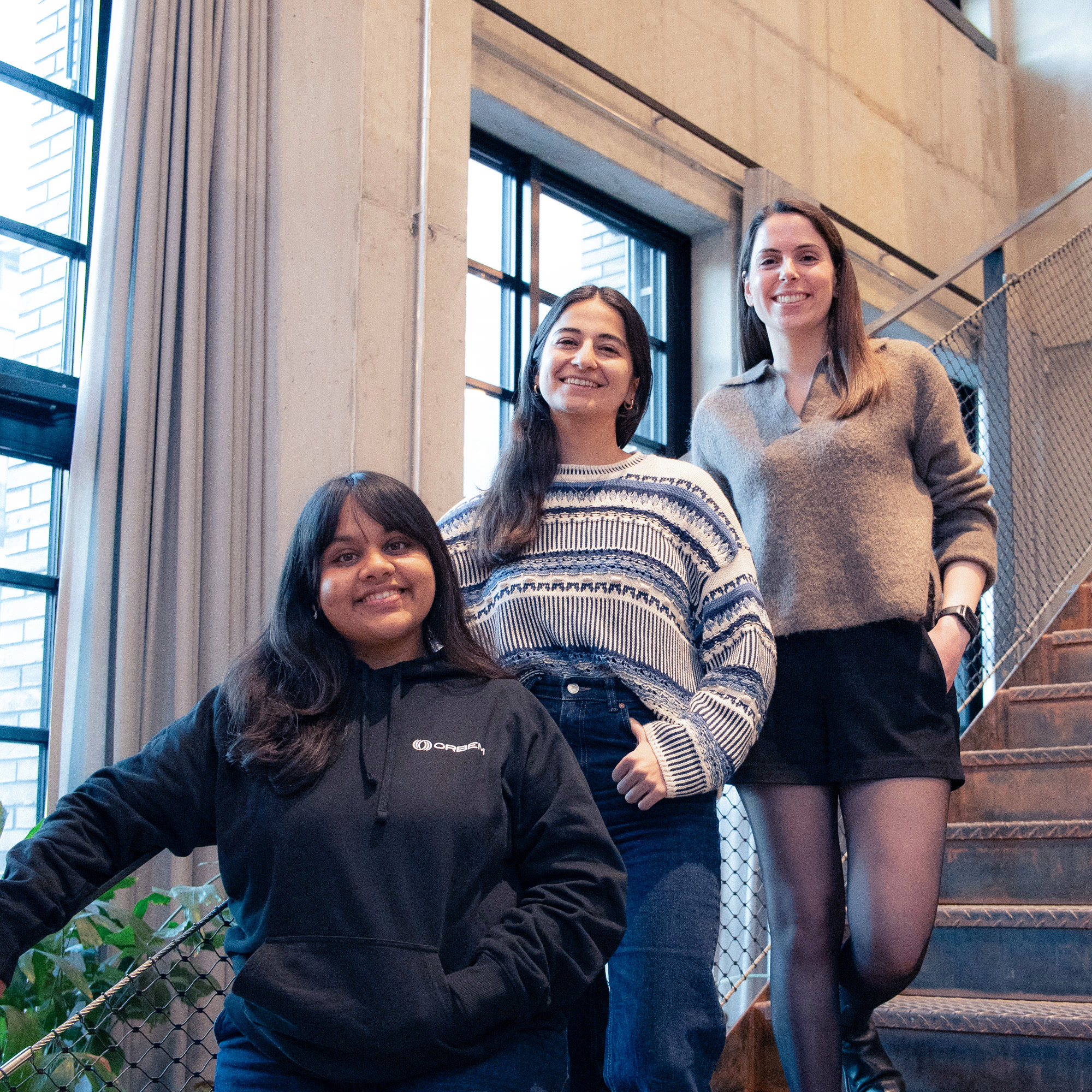
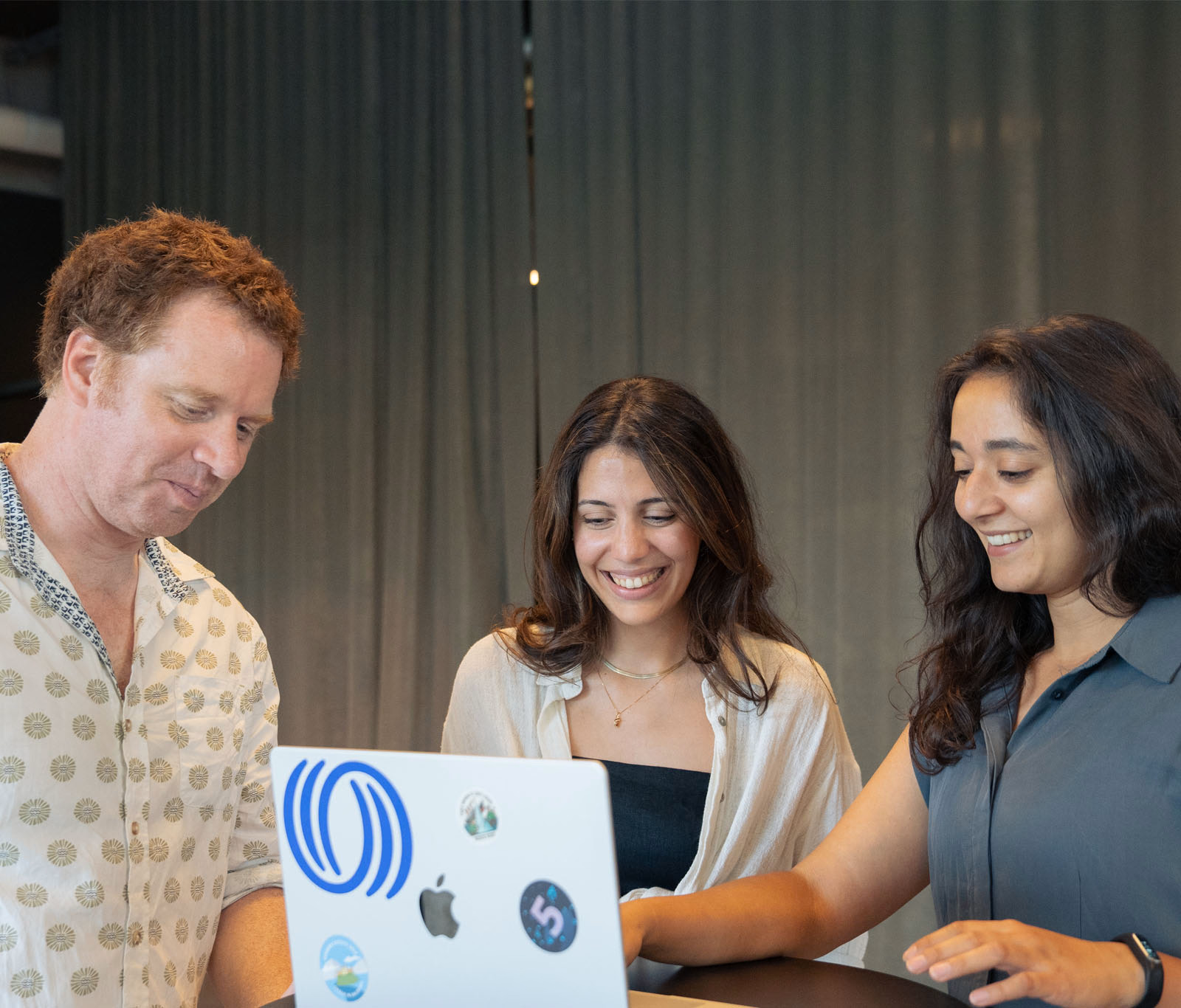
We sat down with three team members whose careers have taken very different paths within Orbem. Each started in a different role and has since grown into new opportunities.
One went from Master's Student to Head of Hardware. Another progressed from Working Student to Senior Product Manager. A third evolved from an individual contributor into a Team Lead.
Yes, their stories are about changing job titles. They're about something else as well though, something that counts more than a title ever will. They are about embracing new challenges, developing new skills, and continuously reinventing themselves.
If you've ever wondered what growth can look like in practice, we hope you'll enjoy these conversations.
Mira Mahavadi, Head of Hardware
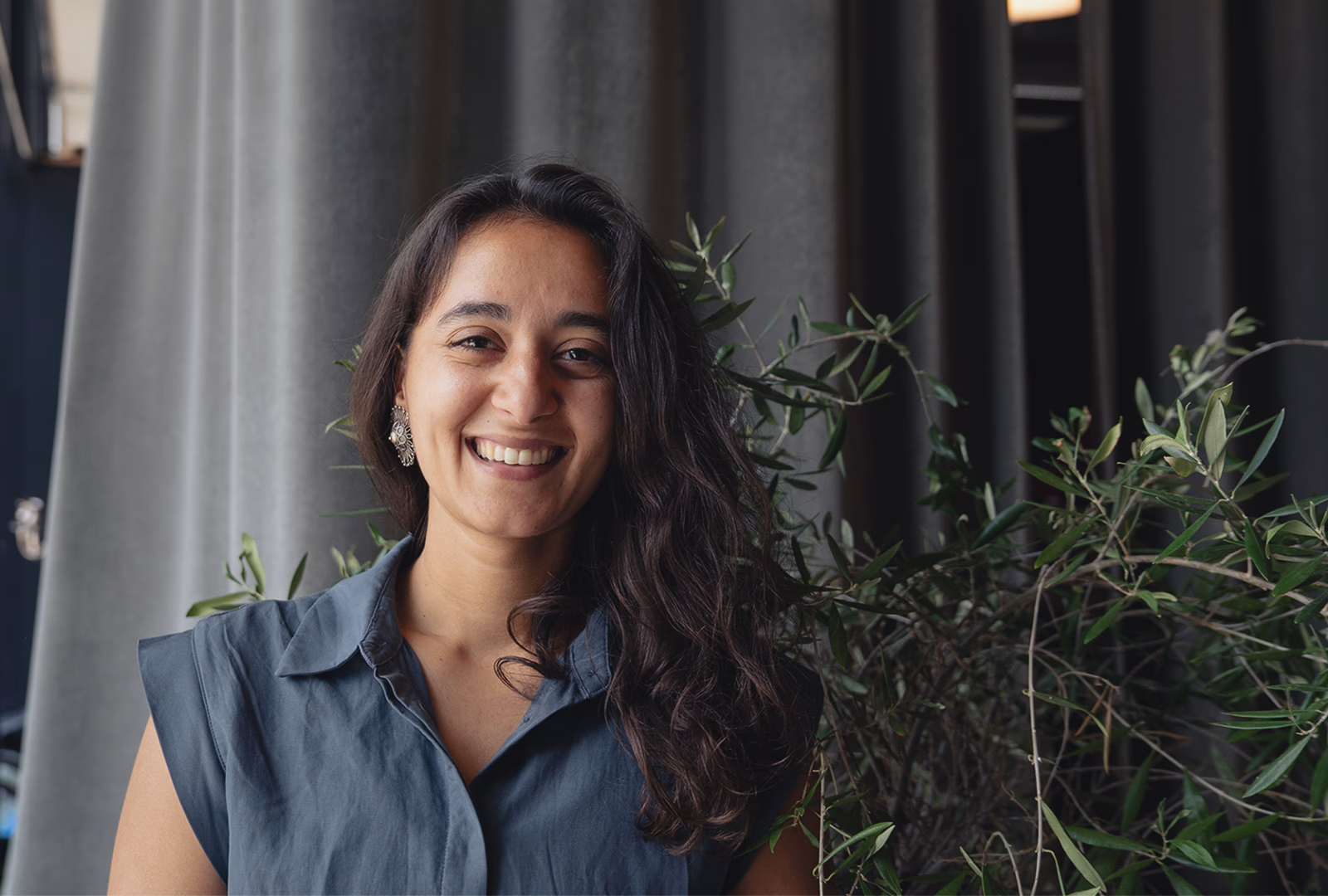
Looking back, what first drew you to Orbem? What role did you start in, and how has your journey evolved to where you are today?
I joined Orbem for the technology. I started as a Master’s Student developing MRI phantoms (a tool for quality control) to simulate embryo movement in eggs. But I quickly got hooked on the bigger vision: industrializing MRI technology - something no one else does - to revolutionize quality control and eliminate food waste in a traditional industry. High-tech innovation creating real sustainability impact.
After helping install our very first Genus Focus on-site, I moved into the role of Product Architect, translating complex customer requirements into technical solutions across cross-functional teams. For the past 1.5 years, I've been leading our Hardware team. My focus has shifted from building solutions myself to enabling the team to scale our products, processes, and impact.
What was the hardest part of that shift for you?
The hardest part was mastering rapid context-switching. When I joined as a full-time employee, I was actually finishing a second Master’s in parallel. I would go from university over lunch to business meetings minutes later. Documentation became my secret weapon so my brain didn't have to hold every detail, a skill that proved vital when stepping into leadership, balancing technical requirements, budget, and team needs.
And of course, imposter syndrome is real, especially as a Woman of Color in the German Tech industry. I started to navigate it by remembering that a hiring team trusted and chose me for this role, I am not here by coincidence. By now, I am able to reframe mistakes and anxiety. Growth only happens through exposure and pushing past your comfort zone. When I fail or hit pushback, I remind myself: this is what learning actually feels like.
Orbem has grown and changed a lot over the years. In what ways has that evolution reflected your own personal and professional growth?
We always say the only constant at Orbem is change, and I’d say my career mirrored that evolution. I joined during the research phase as a student, stepped into full-time as a Systems Engineer for our first product launch, and then transitioned into Product Architect to drive product scalability as we expanded.
I take pride in being adaptable and anticipating where I can contribute next. By growing alongside Orbem's rapid shifts, I built a holistic understanding of our hardware operations. Establishing myself as the go-to person for hardware scalability prepared me to step into the Head of Hardware role when the opportunity came along.
What would be your advice to someone joining Orbem today? How can they keep learning, take on more responsibility, and build a meaningful career?
Be excited about change! Change can feel intimidating, but fast-paced growth always brings fresh opportunities. Instead of focusing on what's changing or doors closing, actively look for the new doors opening and decide where you want to play.
Real career growth happens through exposure, taking on big challenges, and allowing yourself to make mistakes along the way. If things feel comfortable and easy, it might be time to push yourself into something new. Stay curious, embrace the learning curve, and use Orbem’s evolving environment as a launching pad to shape your own path.
Joud Mansour, Senior Product Manager

Looking back, what first drew you to Orbem? What role did you start in, and how has your journey evolved to where you are today?
What first drew me to Orbem was the combination of its ambition and its culture. It was clear that people here were solving problems no one else was tackling, but what stood out even more was the trust people were given to take ownership, grow quickly, and make a real impact.
I started as a Working Student in Technical Program Management, but quickly realized Product Management was where I belonged. I gradually transitioned into that role, and later transitioned into my current role as Senior Product Manager, focusing on making sure we're building the right products for the right reasons.
What was the hardest part of that shift for you?
The hardest part was not the work itself; it was believing I belonged in the room. Moving from working student to full-time meant changing both my own perception and, sometimes, the perception others had of me.
I definitely experienced imposter syndrome, and in some ways I still do. What helped me find my footing was realizing that trust is earned through consistent actions, not titles.
Each project, customer discussion, and difficult decision became an opportunity to prove to myself and others that I am up for it.
Orbem has grown and changed a lot over the years. In what ways has that evolution reflected your own personal and professional growth?
When I joined, Orbem was a much smaller company focused on a single application. Today it is expanding into entirely new markets with a much larger team and a broader vision.
Early on, I worked on a small part of one product; today, I lead the development of a new product in a new market, all the way from concept to execution. I started my career in this company very young, and it has genuinely felt like Orbem and I have grown together.
What would be your advice to someone joining Orbem today? How can they keep learning, take on more responsibility, and build a meaningful career?
Trust yourself and don’t reject yourself before anyone else has the chance to. Some of the biggest opportunities in my career came from saying yes before I felt completely ready.
Learn to fail well: mistakes are not the opposite of growth; they are often the path to it. Ask questions, take ownership, and be willing to step outside your comfort zone. You will never know everything, and that’s okay. The people who grow the most here are often the ones willing to take a step into the unknown and learn along the way.
Benjamin Knowles, Team Lead MRI Engineering
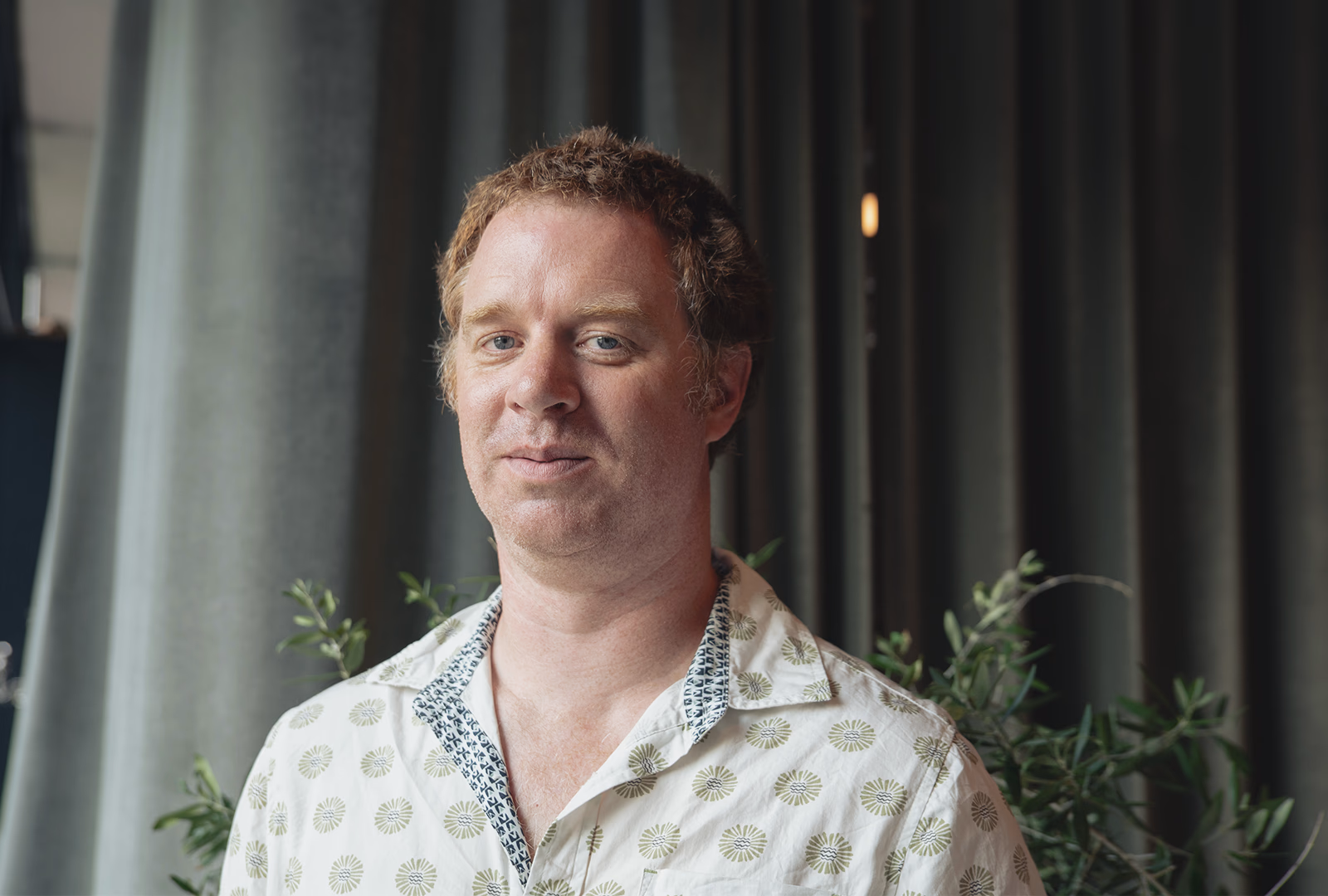
Looking back, what first drew you to Orbem? What role did you start in, and how has your journey evolved to where you are today?
Before joining Orbem, I was working as an academic in Biomedical Engineering for many years. What initially caught my attention was the way in which MRI was being applied.
I joined Orbem as an MRI Scientist because I believed in the company's vision and wanted to help solve the technical challenges it was tackling. It required me to get creative, often thinking outside of the constraints of the medical sector. My work gradually shifted from research-focused science towards software engineering and automation. Today, I lead the MRI Engineering team where we contribute to MRI automation.
What was the hardest part of that shift for you?
The biggest adjustment for me was changing the way I worked. In academia, you're encouraged to become a specialist in a very specific field, often working independently or within a small research group. At Orbem, I stepped into a fast-paced, highly collaborative environment that was quite different from what I was used to. I wouldn’t say I ever felt imposter syndrome, but I noticed areas where I had to improve. I found my footing over a period of time, completing the gaps in my knowledge. Of course, I made mistakes along the way, but these are also opportunities for reflection and improvement.
Orbem has grown and changed a lot over the years. In what ways has that evolution reflected your own personal and professional growth?
When I started, Orbem was just 30 people. As a young company, Orbem didn’t have the structure and processes in place as it does now. I’ve been able to grow as the company has grown from start-up to scale-up. I’ve had to adapt to changes in the structure and processes, as well as improving my hard and soft skills by absorbing information from those around me. Most of my growth has been very much outside of my technical expertise! Management is the latest step. Although I still contribute on a technical level, I now focus on team development.
What would be your advice to someone joining Orbem today? How can they keep learning, take on more responsibility, and build a meaningful career?
I like the fresh perspective that new starters bring to Orbem: These are the people who are onboarding into Orbem’s way of working, where it is easiest to find the gaps and flaws in our processes. I would encourage all those joining Orbem today to be curious not just within their own core competencies, but also about those adjacent to you. Ask why things are the way they are, find those processes or communication pathways that could be better. Bring your previous experience or offer up new solutions to make things better.
Join our team
Help build a healthier and more sustainable world.
About the Author

Gemma Fernandez, Employer Branding Specialist
Gemma drives Employer Branding at Orbem. Passionate about building narratives and strengthening culture, she bridges Talent Acquisition and Marketing to showcase what makes us truly special.