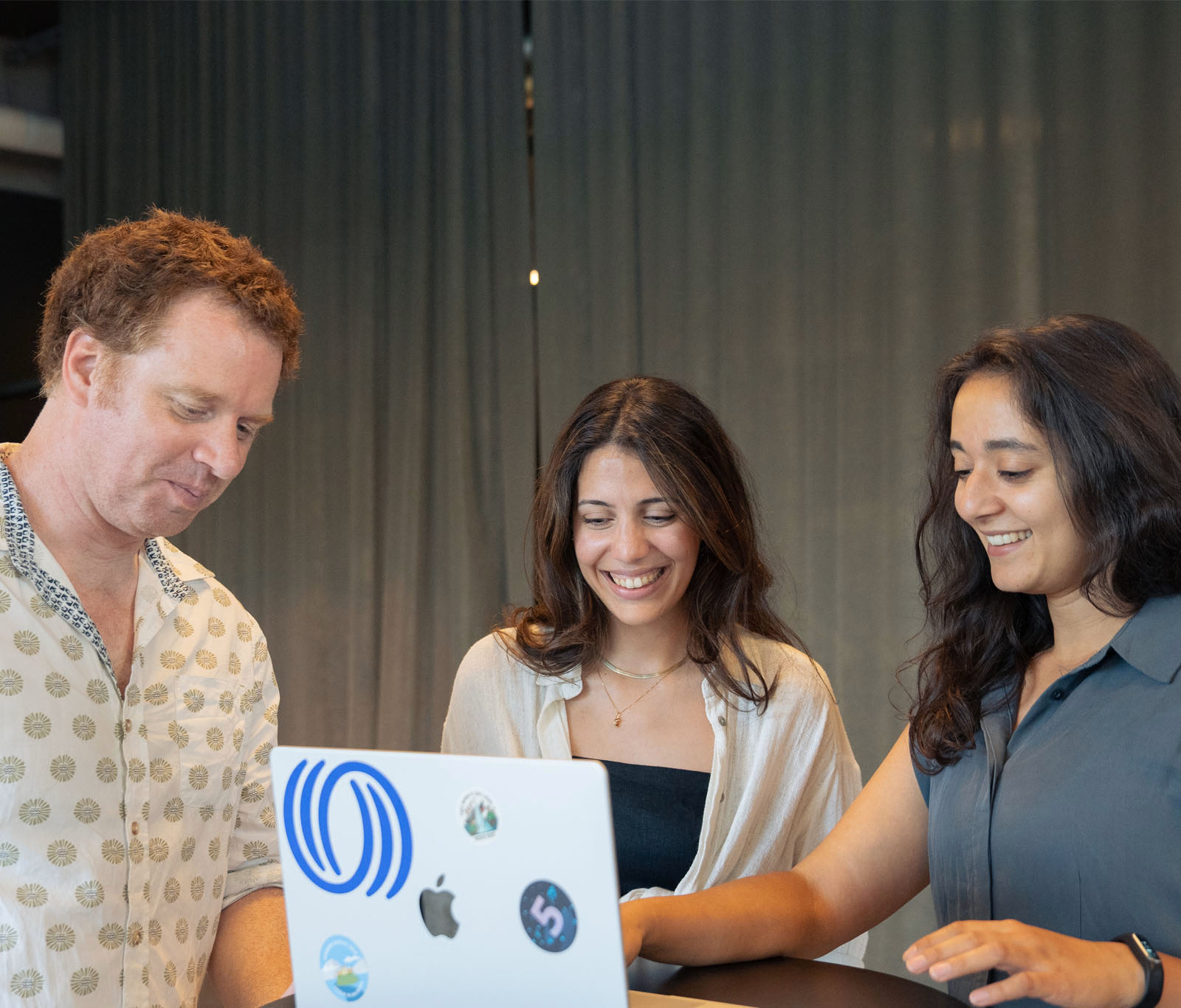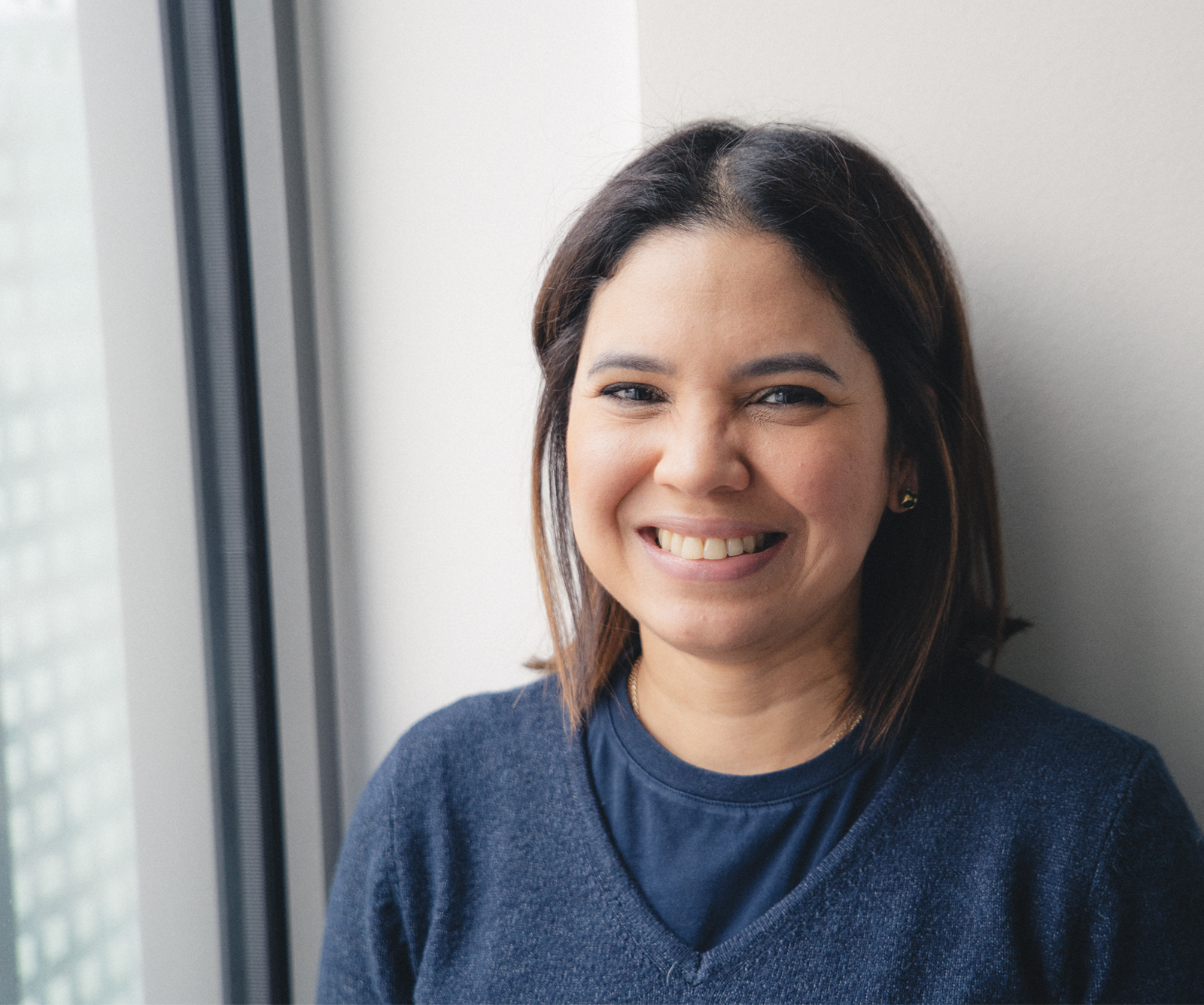
Recently, I sat down with Orbem's talent acquisition team lead Luisana Perez because I wanted to know everything there is to know about our interview process. What do the different stages of the process look like (it's been 2.5 years since I went through it myself so a little refresher was in order). What we are looking for in our candidates, no matter which role we're hiring for? And what makes hiring at Orbem special, from a recruiter's perspective?
Hi Lu, can you tell me a bit about yourself and about Orbem’s talent team?
Of course, happy to! I’ve been leading the talent team for a little over a year and a half now. My job is to recruit the best people for Orbem and to build an environment that the talent team can thrive in. We have three Talent Acquisition Partners: Lina, Rime, and Lauren.
As a team, we oversee hiring across Orbem and we care deeply about creating a great recruitment process. We want every person who interacts with us to walk away with a positive impression of Orbem. We enjoy meeting new people, have a lot of fun working together, and are passionate about what we do.
What does Orbem’s interview process look like? What are the different stages candidates go through?
Our interview process has three core stages. First, there’s an intro call, usually with someone from the talent team. This our first opportunity to understand a candidate’s experience, motivation, and alignment with Orbem’s mission and values. We don’t compromise on our hiring standards, and alignment with our mission is essential.
Next, candidates take on a technical challenge or assessment built around scenarios they could face in their day-to-day work at Orbem. We want to understand what they know, but how they think, approach problems, and communicate their solutions.
Finally, candidates are invited to an interview day which consists of three different interviews with different team members. One of these is focused on culture and company values. A second one zooms in on ways of working, collaboration, and communication. The final round is a potential interview that focuses on how the candidate pictures their future at Orbem. We care about this because we want to hire people who want to grow within the organization, and people who are a valuable, long-term addition to the existing team.
Looking ahead to 2027, we're adding a Lead Screening stage to bring candidates closer to the team from the start. This will be an opportunity to meet the hiring manager or broader team, with a focus on leadership and a first, light-touch assessment of technical skills. For candidates, it means getting a better feel for the team, expectations and role from the outset, helping them make a more informed decision about whether Orbem is the right next step for them.
You mentioned that you assess early on if someone is a good fit for Orbem’s culture. How can you tell?
There’s several aspects to that. First of all, we need to make sure people want to join Orbem for the right reasons. Are they motivated by our mission and purpose? Do they share our values, have they shown that they lived these values in previous roles?
And then we look for early indicators that a candidate is ready to adapt to our working environment. We are very agile, we care about quality and about speed. We look out for each other. We value diversity, we don’t expect everyone to think alike. We use feedback to grow, we interpret setbacks as learnings. Those are just some of the things we look for.
Who does a candidate usually meet along the way and why is it those specific people?
Candidates meet quite a few Orbem team members throughout the process. If I'm not mistaken, that’s anywhere between nine to ten people. We open our doors wide because we want candidates to have a very clear impression of what working at Orbem looks like.
We want to make the right decision but we also want our candidates to have all the information they need to make a good decision for themselves. That is something I personally love about our process.
We don’t handpick who attends every interview because we want to openly and honestly reflect what working at Orbem is like, no matter which team you are part of. If you applied for a role in AI, you might talk to someone who works in MRI, in Finance, or in Marketing.
Everyone meets a member of the People and Culture team and the hiring manager as well as direct team members or people they would collaborate with closely. It’s also very common for one of our founders to still be part of the final interview stages, if time permits.
A process like that takes some time. Do you see that as an issue?
Honestly, no. We do our best to schedule all interviews as quickly as possible and guide our candidates through the process accordingly. When senior management is involved, it can sometimes be difficult to find time.
But finding the best candidate is always more important than making a speedy decision. Even if that means that we might lose someone because of time. Bringing in the right person is what matters most.
Is there something about interviewing for Orbem that’s different from interviewing with other companies? Do you ever get any feedback on that?
We put a lot of thought into how we guide candidates through the process. For example, we share slide decks during interviews to help people follow along, understand what we're discussing and get a better picture of what Orbem actually does. It might sound like a small thing, but visuals make information much easier to digest. We don't need to make the process harder than it needs to be.
We're also very open about compensation levels from the start. Candidates appreciate knowing where they stand and what to expect. I think that's just the right way to approach it. No surprises later in the process.
But what stands out to me personally is the human side of hiring. We care about authenticity, about listening and about seeing people as individuals, not just as profiles we're assessing.
I had a recent example that really stuck with me. I asked a candidate if they were comfortable with me using my AI notetaker during our conversation. They said something along the lines of: "If we use an AI notetaker, I'll probably have to adjust the way I speak because I know I'll be compared with other candidates. I won't necessarily be myself."
So what did you do?
I switched it off.
I want to meet the real person, not someone who's trying to perform for an assessment. If a tool gets in the way of having an authentic conversation, then we don't need the tool. I think that's something worth protecting in our hiring process.
We talked about making sure we hire the right candidate. How do you handle rejections?
I think clear is kind, and that's something we aim to practice when it comes to rejections. Candidates deserve honesty and clarity, even when the answer isn't what they were hoping for.
We collect feedback from everyone involved in the interview process, which helps us give candidates a clear understanding of our decision and, where possible, specific feedback they can take away.
I also want to set realistic expectations: not every rejection can be fully personalised, particularly in the earlier stages. But the further someone progresses in our process, the more time and investment we make in providing individual feedback.
We call candidates who have made it further. They've invested their time and energy in getting to know us, and I think they deserve the opportunity to understand our decision, ask questions and have a proper conversation.
Now back to who we hire. You've told me before what you look out for. What is an immediate green flag to you?
It's the way they communicate. Being able to adjust to your audience, express your thoughts clearly and structure information in a logical way is such an important skill that's often overlooked.
Because there is so much cross-functional collaboration at Orbem that skill is even more important here than it might be elsewhere.
Something else I love is when candidates come prepared with questions. Not necessarily difficult questions, but very well thought questions. I read that as an indicator of interest.
What can a candidate do to prepare and to give themselves the best shot?
We share a number of resources with candidates during the process, and I'd encourage people to take the time to go through them. They give you a good sense of who we are, what we're building and what we care about.
I'd also say: read the job description. We put a lot of effort into explaining the role, the expectations and what we're looking for. It's not just a list of requirements; it's there to help you understand what you'd be signing up for.
I know we're all busy, but if you're serious about an opportunity, do your homework. It makes a difference.
Is there some common misconception that people have about interviewing with Orbem?
We’ve had candidates back down from the interview process once they heard that we run a cognitive aptitude assessment. They argued this kind of assessment has nothing to do with the role. I disagree. Because no matter what role you fill, it's never just about what you're doing but about how you're doing it as well. We use this assessment to evaluate the candidate's ability to solve problems, learn quickly.
Interviews can be highly subjective because we all have our biases. The assessment helps us assess certain skills in a more objective way. It's an additional perspective about the candidate. What is important to know is that it doesn't move the needle in terms of decisions. It always only complements a decision.
Our final question for today: In your experience, who thrives at Orbem?
People who thrive at Orbem are those who set the bar high but don't let perfection get in the way of progress.
They know how to balance speed with quality, take ownership and step forward to solve problems rather than waiting for direction. They're comfortable challenging the status quo and finding better ways of doing things.
They're also people who see feedback as an opportunity to grow and improve, rather than something to shy away from. And ultimately, we're a very mission- and value-driven company. It's not just about believing in our values, but actively choosing to live them in how we work, make decisions and interact with each other.
About the Author
Barbara Jilek, Senior PR and Content Marketing Manager
Barbara builds relationships with journalists and tells Orbem’s story on all our channels as well as anywhere else people will listen.
Latest articles

Food waste starts with a decision made too late.
Climate change, labor shortages and market volatility put agricultural businesses under pressure. Artificial Intelligence helps the sector make decisions while they still matter, to reduce food waste, gain a competitive advantage, and increase operational resilience.