The Seven Internal Avocado Defects That Affect Most Producers

Avocado internal defects affect producers’ margins, but what are they, where are they, and how do we detect them?

Fruits
The Seven Internal Avocado Defects That Affect Most Producers

Bruising, mechanical damage, stem rot, internal or vascular browning, chilling injury, and ripeness are avocado defects that cannot be detected with the human eye. Avocado producers aim to identify these internal defects without cutting their valuable fruit open, reduce their waste, and avoid misclassification. Here you will find which technologies make this possible. 

How avocado waste is squeezing producers’ margins

The global avocado market in 2025 surpassed $20 billion [ref]. By 2030, the demand is expected to increase by another $7 billion, with an annual compound growth rate (CAGR) of 7.4% [ref, ref]. This will result in an annual production of 12 million tons, making the avocado the second best-selling tropical fruit in the world [ref]. Europe still holds a quarter of the global avocado market, a reported $5.38 billion in 2025, with an average growth rate of 16%. There are two countries that are leading the avocado market growth: Germany with a 32% growth rate and Italy with a 26% growth rate [ref]. 


Although the avocado market future looks promising, producers are struggling with an average of 24.1% post-harvest loss [ref]. Internal defects account for part of the waste that is draining the avocado margins. Below, seven of the most common avocado defects are listed: what they are, where they are found, and which technologies can detect them.

Seeing it for yourself: MRI scan vs. physical sample

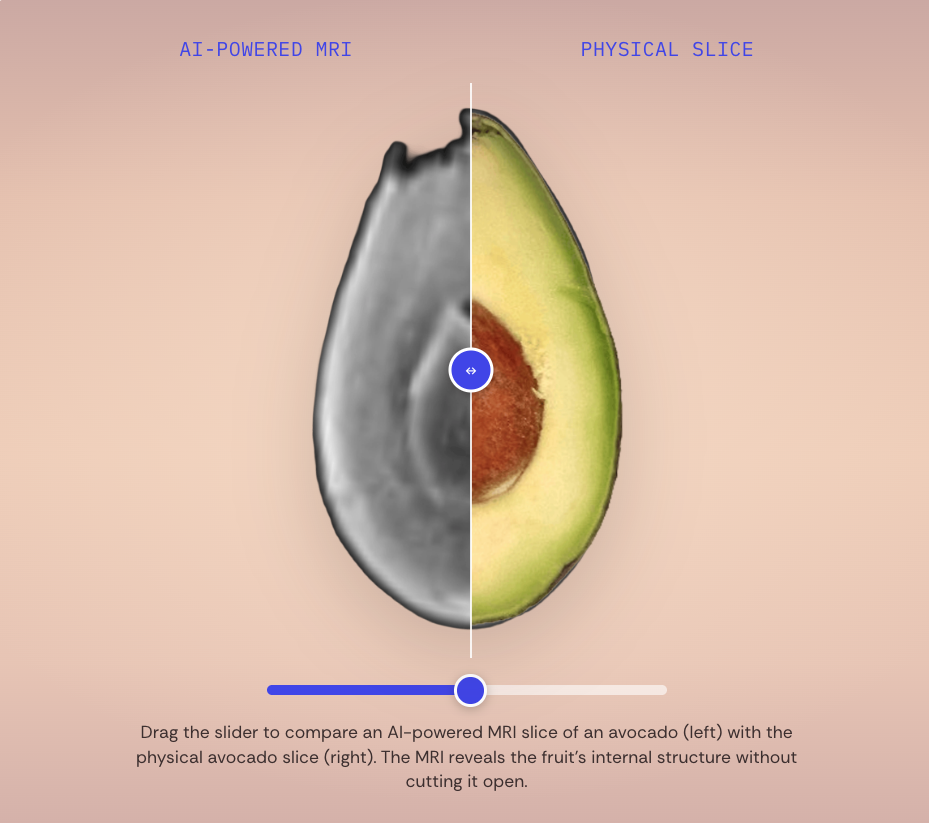
Left side: an AI-powered MRI scan slice (2D visualization) of a whole, unripe avocado, showing dark, mottled discoloration tracing along the vascular tissue from the stem end,  the internal signature of early stem rot, weeks before it would be visible from outside.

Right side: the same avocado, physically cut open, confirming the browning pattern the scan flagged.
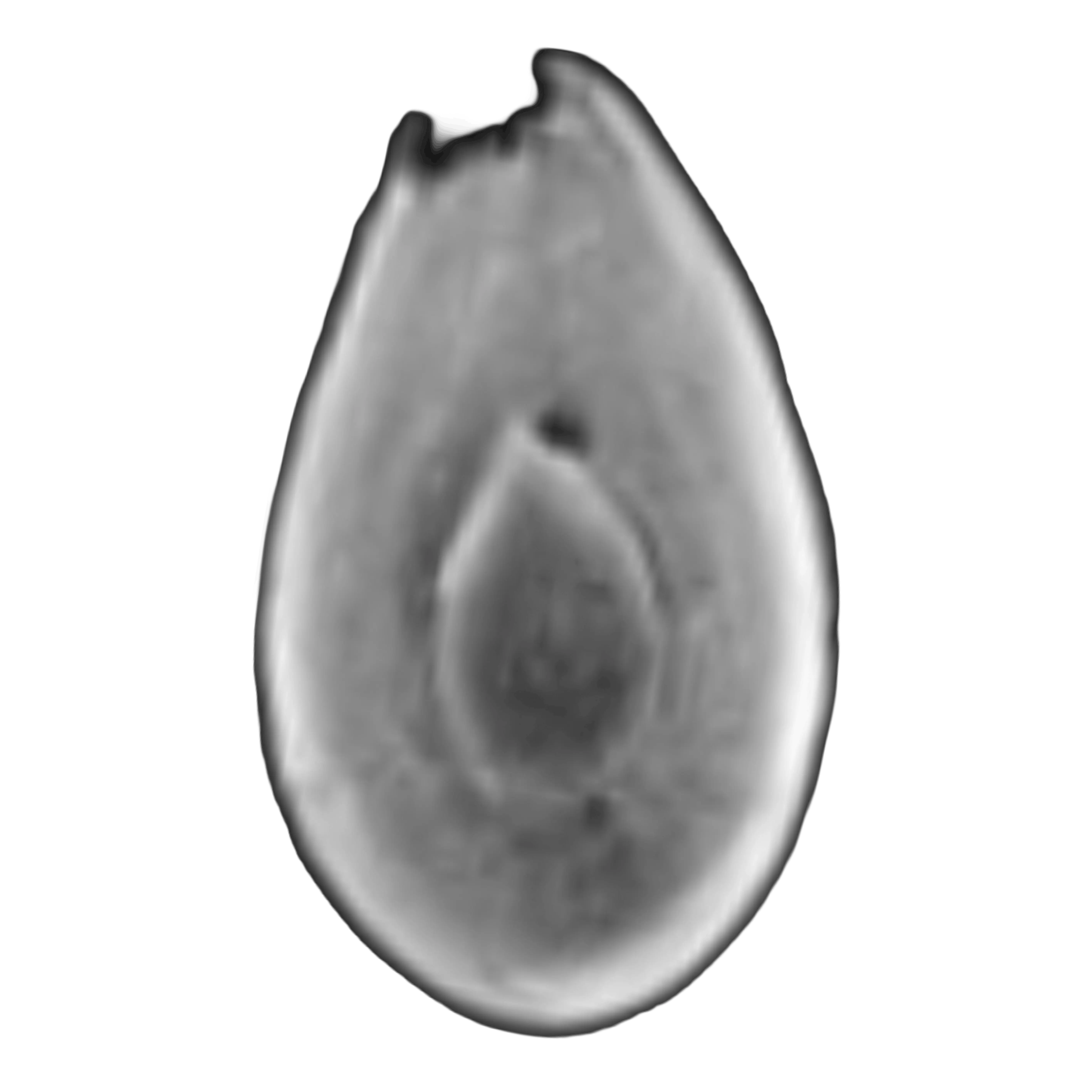
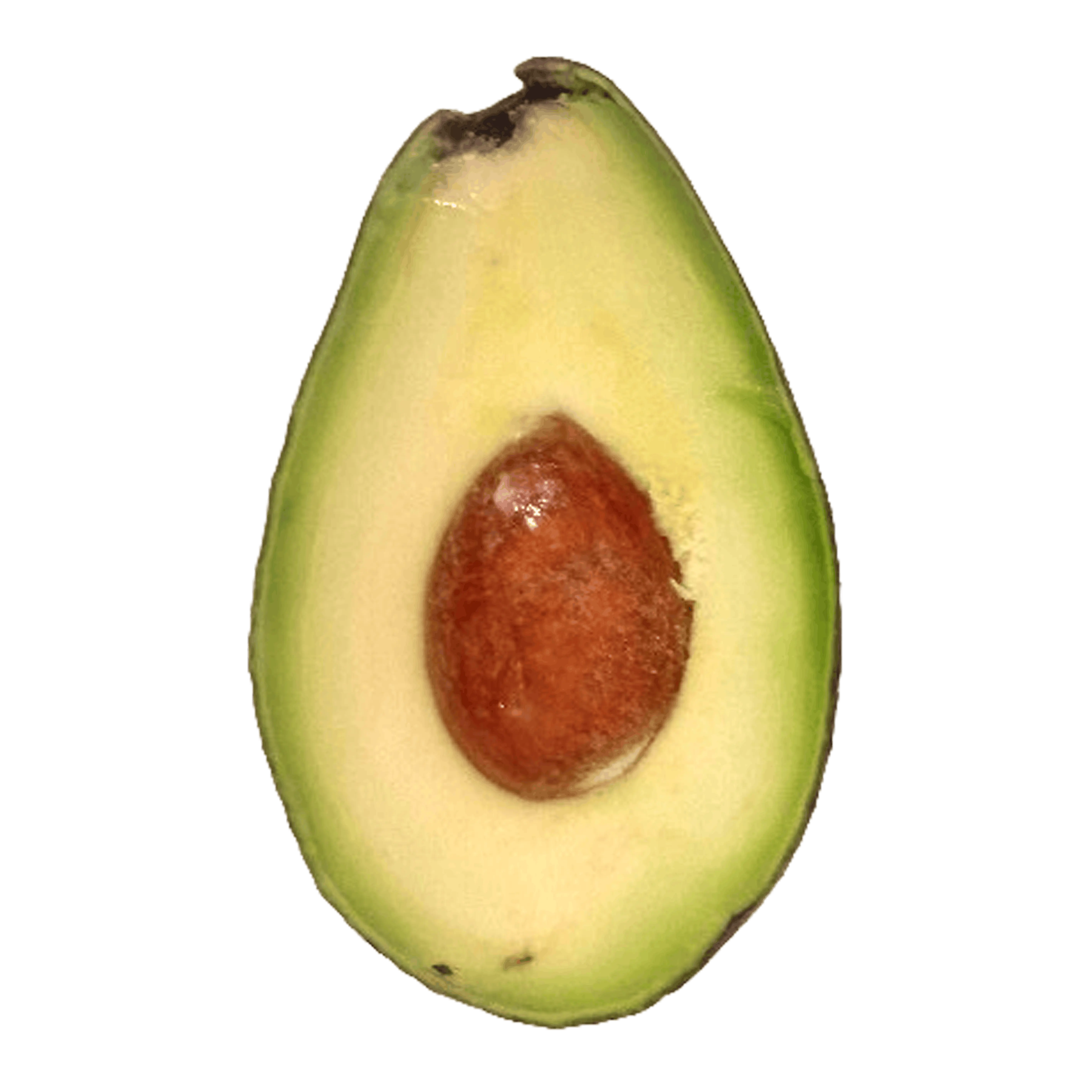
AI-powered MRI slice of an avocado showing its internal tissue structure without cutting the fruit Photograph of a physical avocado slice cut open to show the flesh and seed
Drag the slider to compare an AI-powered MRI slice of an avocado (left) with the physical avocado slice (right). The MRI reveals the fruit's internal structure without cutting it open.

Avocado internal defects explained
‍

The seven most common internal avocado defects: description, common location, incidence rate, and the technologies that can or cannot detect each one (AI-powered MRI, Vis-NIR, NIR, X-ray, and manual methods).
Defect Description Common location Incidence rate Technologies that can detect it
1. Small imperfections and internal bruising Internal mechanical damage caused by drops (exceeding 15 cm) or compression during harvest, packing, and sorting. Pressure ruptures cell membranes and triggers localized browning once the fruit softens. Sub-epidermal mesocarp (flesh) directly beneath the point of impact. Around 20–25% of fruit in retail studies shows usable flesh loss due to handling bruises. [ref] AI-powered MRI for immediate, full-depth, non-destructive detection on Day 0 (via water signal changes); Vis-NIR spectroscopy is blind to deeper bruises; Manual destructive slicing only catches defects in small sample batches.
2. Internal or vascular browning & leaching Oxidation of phenolic compounds in the fruit's ten main fiber strands (vascular browning), which can expand into discolored brown halos across the flesh (vascular leaching). Caused by cold storage stress, low calcium levels, or tree water stress. Fibrovascular bundles throughout the mesocarp, radiating outward into surrounding flesh. Affects 10–20% of long-distance exported shipments. [ref] AI-powered MRI (unaffected by skin thickness or depth); Vis-NIR spectroscopy (limited to a shallow penetration depth of 2–5 mm beneath the skin).
3. Stem rot or stem decay (Stem-end Rot) Invasive fungal decay (Lasiodiplodia, Neofusicoccum) that enters through the cut stem button during harvest. It remains hidden while the fruit is hard and green, then rots the flesh as the avocado ripens. Stem end, forming a dark, wedge-shaped rot spreading down into the flesh. Can exceed 30% in regions with rainy harvest seasons. [ref] AI-powered MRI (flags internal browning along the central core long before surface symptoms appear); Visual inspection (only works once skin turns black, which is too late); NIR (limited to surface layers).
4. Anthracnose (body rot) Latent fungal infection (Colletotrichum) originating in the orchard. Fungal spores remain dormant on the skin and invade the flesh as natural antifungal compounds drop during ripening. Outer mesocarp, forming a circular, hemispherical dark rot beneath the skin. 15–30% in warm, humid growing seasons or extended transit. [ref] AI-powered MRI (maps 3D hemispherical rot patterns inside the flesh); NIR (detects only if rot is directly under the outer 4 mm of skin).
5. Chilling injury (gray pulp & pulp spotting) Physiological damage caused by storing fruit below 4 °C or rapid cooling during transport. Results in diffuse smoky-gray pulp or tiny circular black specks scattered in the flesh. Distal blossom end, around the seed cavity, or midway through the pulp. 10–25% of container shipments subjected to temperature fluctuations or ocean delays. [ref] [ref] AI-powered MRI (maps whole-fruit cellular breakdown and core discoloration); Vis-NIR (fails to reach deeper tissue near the seed cavity).
6. Seed cavity necrosis & premature germination Early seed sprouting (vivipary) in late-harvested fruit. The growing seed draws water from surrounding tissue, causing the seed lining to dry out, turn black, and decompose. Around the seed cavity and inner flesh lining. 5–15% in late-season harvests (>30% dry matter). [ref] AI-powered MRI (visualizes the seed cavity and internal tissue structure in 3D); Vis-NIR & X-Ray (ineffective at distinguishing early tissue breakdown).
7. Under-ripeness or immaturity Avocados harvested too early (below 21% dry matter). Immature fruit fails to soften evenly, loses water rapidly, shrivels at the stem end, and remains rubbery and watery. Whole fruit (mesocarp texture and water-to-oil balance). 5–15% of avocados are discarded or rejected due to uneven or failed ripening. [ref] AI-powered MRI / Low-Field NMR (measures dry matter and lipid-to-water ratio across the whole intact fruit); Handheld NIR (measures surface dry matter); Penetrometer (destructive firmness test).

AI-powered MRI detects all seven defects not just a few

Every one of the seven defects above shares the same underlying challenge: they develop inside the fruit, often before any external symptom appears, and by the time they're visible from outside, it's frequently too late to act. The tools currently used across the avocado supply chain are almost all light-based. Near-infrared (NIR) spectroscopy , has been available since the 1950s and the technology behind some handheld avocado quality meters, works by measuring the spectral fingerprint of light reflected from or transmitted through the fruit; but that light typically penetrates only up to about 9 to 11 mm into an avocado before it's absorbed or scattered [ref]. That's a meaningful improvement over the naked eye, but stem rot, deep bruising, chilling injury near the seed, and vascular browning frequently sit well beyond that depth. Hyperspectral imaging faces a similar ceiling, and neither technology can reliably resolve defects at the fruit's core.

AI-powered MRI works on a fundamentally different physical principle. Unlike light, the radio waves and low magnetic field used in MRI aren’t scattered or absorbed by opaque tissue. They interact with water and fat molecules throughout the fruit, so one scan captures the whole avocado from skin to core. That means bruising near the surface, mechanical damage mid-flesh, stem rot approaching from the vascular system, chilling injury spreading from the core, and uneven ripening around the seed cavity can all be captured in the same scan.

Frequently Asked Questions

What are the most common defects when growing avocados?

Externally, growers commonly deal with ridging, sunburn, lenticel damage, thrip damage, and scarring; mostly cosmetic issues with limited effect on internal quality. The more consequential defects, though, are internal: bruising and mechanical damage from handling, stem rot spreading from the stem end, chilling injury from improper cold storage, and ripening disorders such as uneven, premature, or checkerboard ripening. These internal defects are responsible for the bulk of the estimated 20–40% post-harvest losses seen across the avocado supply chain.

What attributes commonly determine avocado quality?

Avocado quality is typically assessed using dry matter and oil content (which predict flavor and ideal harvest timing), firmness (an indicator of ripeness stage), external skin color and defect percentage, and internal flesh condition — including the presence of bruising, discoloration, or vascular browning. Because avocados only ripen after harvest, getting the maturity assessment right at picking time has an outsized effect on all of these downstream attributes.

How can you tell if an avocado is good without cutting it open?

The classic gentle-squeeze test only estimates firmness and, by extension, ripeness stage; it says nothing about internal bruising, stem rot, chilling injury, or vascular browning happening beneath the skin. Skin color is similarly unreliable on its own, since color formation varies by cultivar, growing region, and season. Handheld NIR devices can estimate dry matter and detect some near-surface discoloration, but their penetration is limited to roughly the outer 5 mm of the fruit. The most reliable way to check an avocado's true internal condition without cutting it open is whole-fruit imaging technology such as AI-powered MRI, which sees all the way to the seed while keeping the fruit intact and sellable.

‍

About the Author

Aikaterini Mavroudi, Junior MRI Application Specialist

With a background in medical technology engineering, Aikaterini focuses on understanding and analyzing defects in fresh produce, such as avocados. Before joining Orbem, she worked with mid-infrared spectroscopy at Helmholtz Center’s Chair for Biological Imaging.
‍

‍

‍

Latest articles

Industrial MRI Technology Plans to Eliminate Produce Guesswork for the Future of Fruit Grading by 2027
Fruits
News
01.07.2026

Industrial MRI Technology Plans to Eliminate Produce Guesswork for the Future of Fruit Grading by 2027

With a 2027 U.S. debut on the horizon, German tech company Orbem is set to transform fresh produce grading with AI-powered MRI.

Miguel Ángel Jiménez explains why JimboFresh partners with Orbem for fruit quality control
Fruits
News
12.06.2026

Miguel Ángel Jiménez explains why JimboFresh partners with Orbem for fruit quality control

In this interview with Spanish trade magazine ValenciaFruits, Miguel Ángel Jiménez explains why he chose to work with Orbem.

JimboFresh Becomes the First Watermelon Producer to Inspect Fruit from Skin to Core
Fruits
12.05.2026

JimboFresh Becomes the First Watermelon Producer to Inspect Fruit from Skin to Core

Orbem’s AI-powered MRI detects internal fruit defects and helps reduce food waste starting in the 2026 season.