In 2023, Norway's largest food distributor implemented in-ovo sexing and began rewarding egg producers with a 10% premium for in-ovo sexed eggs. The competitive map for the rest of the supply chain changed as a result.
For Andreas Salte, a third-generation poultry operator with 50 years of family history in the industry, the answer was to build something entirely new: Sirevåg Rugeri. We spoke with board member and business consultant Christoffer Singstad about how Sirevåg Rugeri went from blueprint to 2 million females per year and what the Genus Focus has meant for its success.
To set the scene, could you briefly describe who Andreas Salte is, what Sirevåg Rugeri does, and what the limitations were before you built the new hatchery?
The Salte family has been active in the poultry industry for over 50 years and has distributed Dekalb since 2008 (Shaver before that). Salte and Dekalb White have had significant market growth, and the market share has increased from around 25% in 2008 to around 55% in 2026.
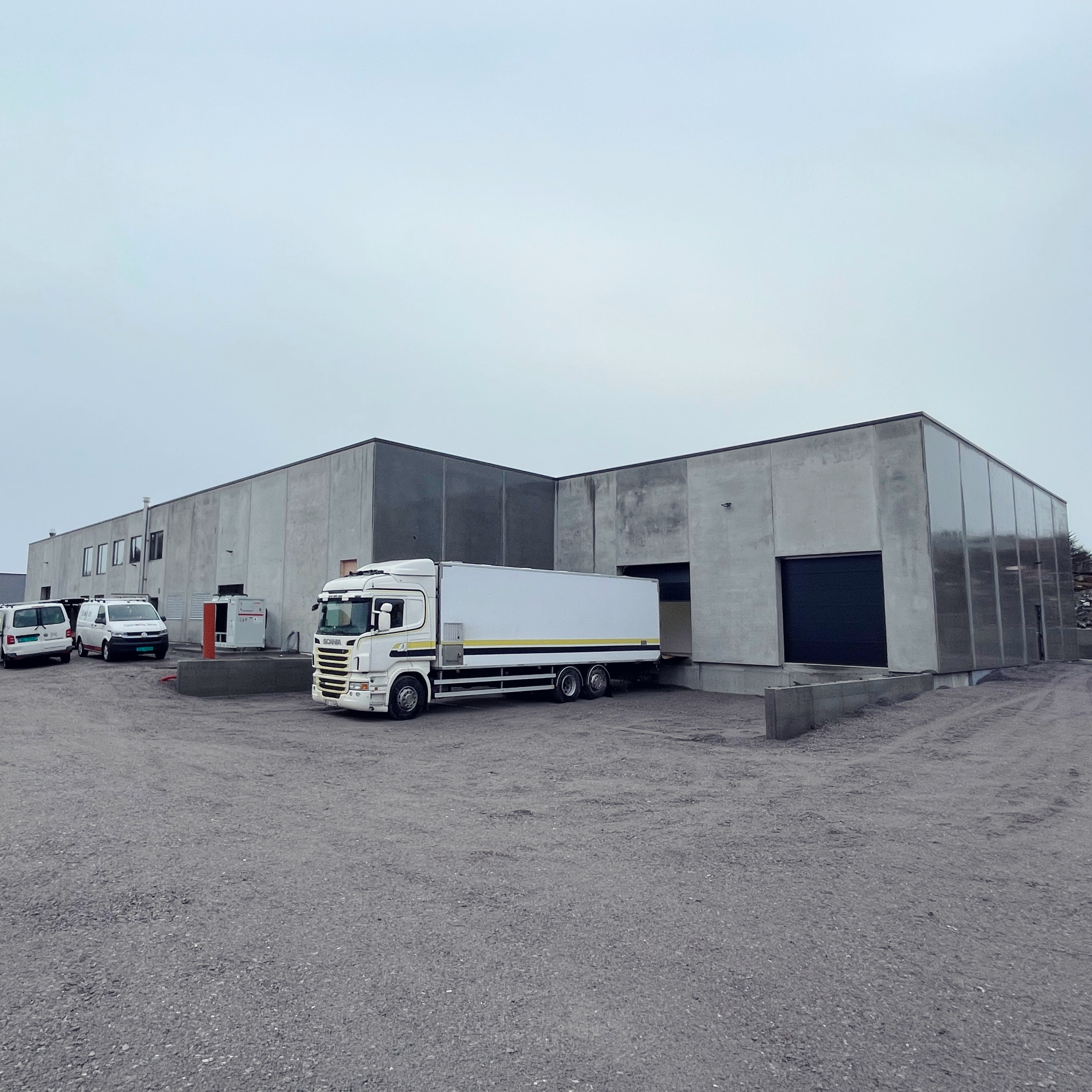
Sirevåg Rugeri AS is a newly established company that built a brand-new hatchery in 2024 to enable in‑ovo sexing and support continued growth of the Dekalb White in the Norwegian market and for Andreas Salte’s operations.
The hatchery opened in February 2025 and hatches 2 million females per year. The first commercial in-ovo flock was hatched in March 2025, and since then we have scanned more and more of our production using the Genus Focus.
Our previous hatchery was a patchwork of old and new equipment that had served its purpose, but by this point it was holding us back. Capacity was limited, biosecurity was difficult to manage, and any transition to in-ovo sexing was out of the question.
What were the biggest pain points or inefficiencies you were trying to solve when you started looking into in-ovo sexing technology? What motivated you?
Nortura, Norway’s largest food distributor and the government‑appointed market regulator, holds approximately 65% of the Norwegian egg market. The company is a cooperative owned by Norwegian farmers and is responsible for maintaining a balanced relationship between supply and demand in the egg and meat markets — a role assigned by the Norwegian Agriculture Agency.
In 2022, Nortura acquired the Lohmann hatchery, and in 2023 implemented a strategy to introduce Seleggt’s (formerly Respeggt) in‑ovo sexing technology. The first in‑ovo-sexed chicks hatched in October 2023, after which Nortura introduced a pricing model that rewarded egg producers with approximately 10% higher payment per kilo for eggs from layers that had been in‑ovo sexed.
At the same time, Nortura communicated to the market that, for animal welfare reasons, it aims for all eggs to be in‑ovo sexed in the future. The decision created significant pressure on Salte, making it essential to act swiftly to secure competitiveness and ensure long‑term survival in the market.
A transition to in‑ovo sexing was challenging for Salte, as it required a major investment in a completely new hatchery. We spent six months doing calculations and developing business plans to identify a sustainable way forward. As a result, Salte partnered with leading companies in the feed industry — Fiskå and Felleskjøpet — to establish Sirevåg Rugeri AS and begin developing a state‑of‑the‑art hatchery.
Why did you choose the Genus Focus over other solutions on the market?
Market development played a key role in our decision. We observed that Orbem had secured several major contracts at the beginning of 2024, demonstrating strong market momentum. The Sales team provided excellent support and insight throughout our evaluation process.
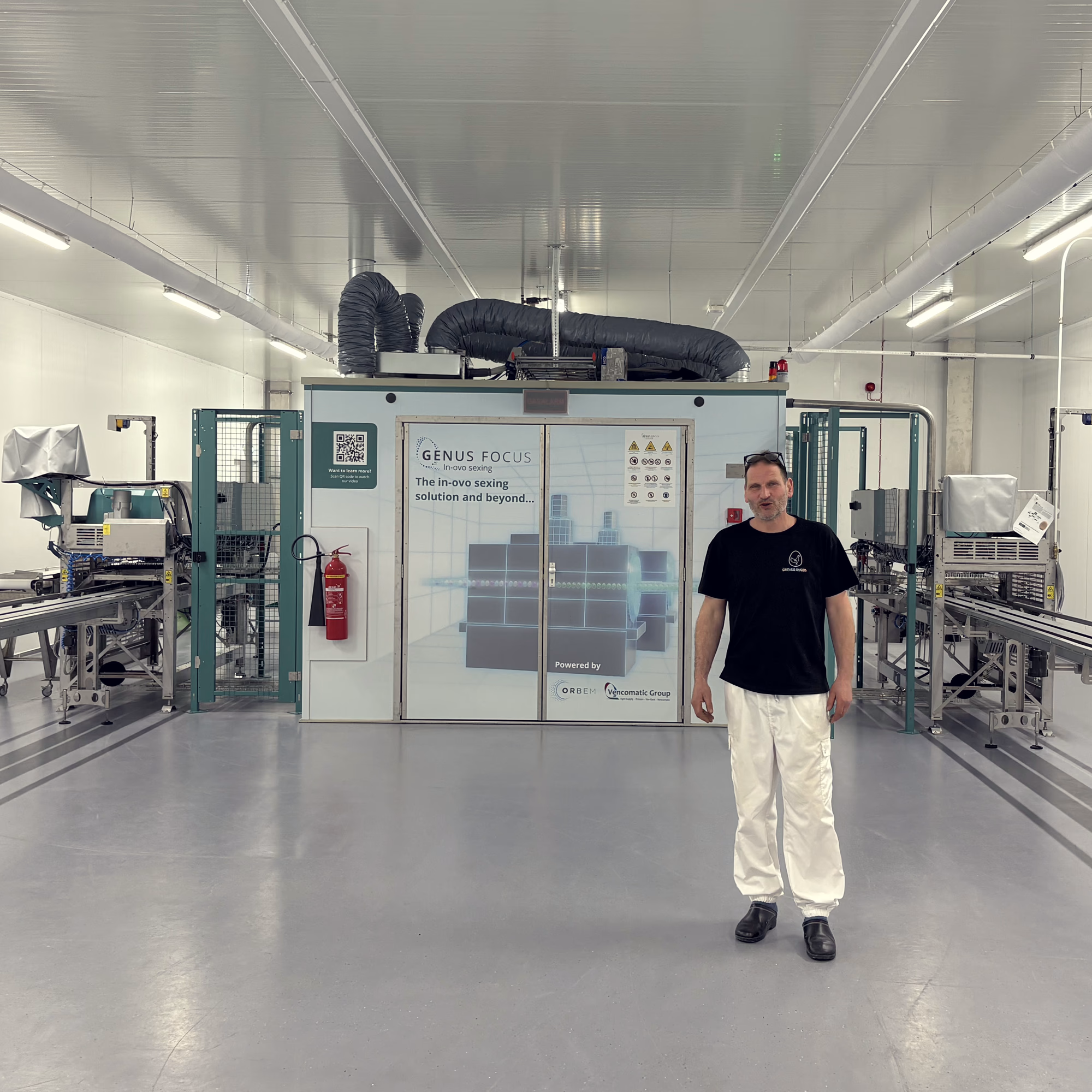
The Genus Focus technology, based on contactless MRI combined with deep‑learning algorithms, determines the sex of the embryo in a non‑invasive way, posing no biosecurity risks and maintaining high hatchability rates. It is labor‑efficient, requiring only one operator, scalable through additional scanning modules, and backed by 24/7 support.
Andreas considers labor efficiency extremely important, as it is increasingly difficult to find qualified personnel for work in hatcheries and on his rearing farm. Labor costs are high in Norway, and the younger generation tends to prefer other types of jobs, making efficiency a key factor for long‑term sustainability.
Since implementing the Genus Focus, what concrete improvements have you seen in hatchery efficiency?
First of all, animal welfare has improved thanks to in-ovo sexing with the Genus Focus. Thanks to precision in-ovo sexing, we have to do almost no culling at all. That is a major improvement.
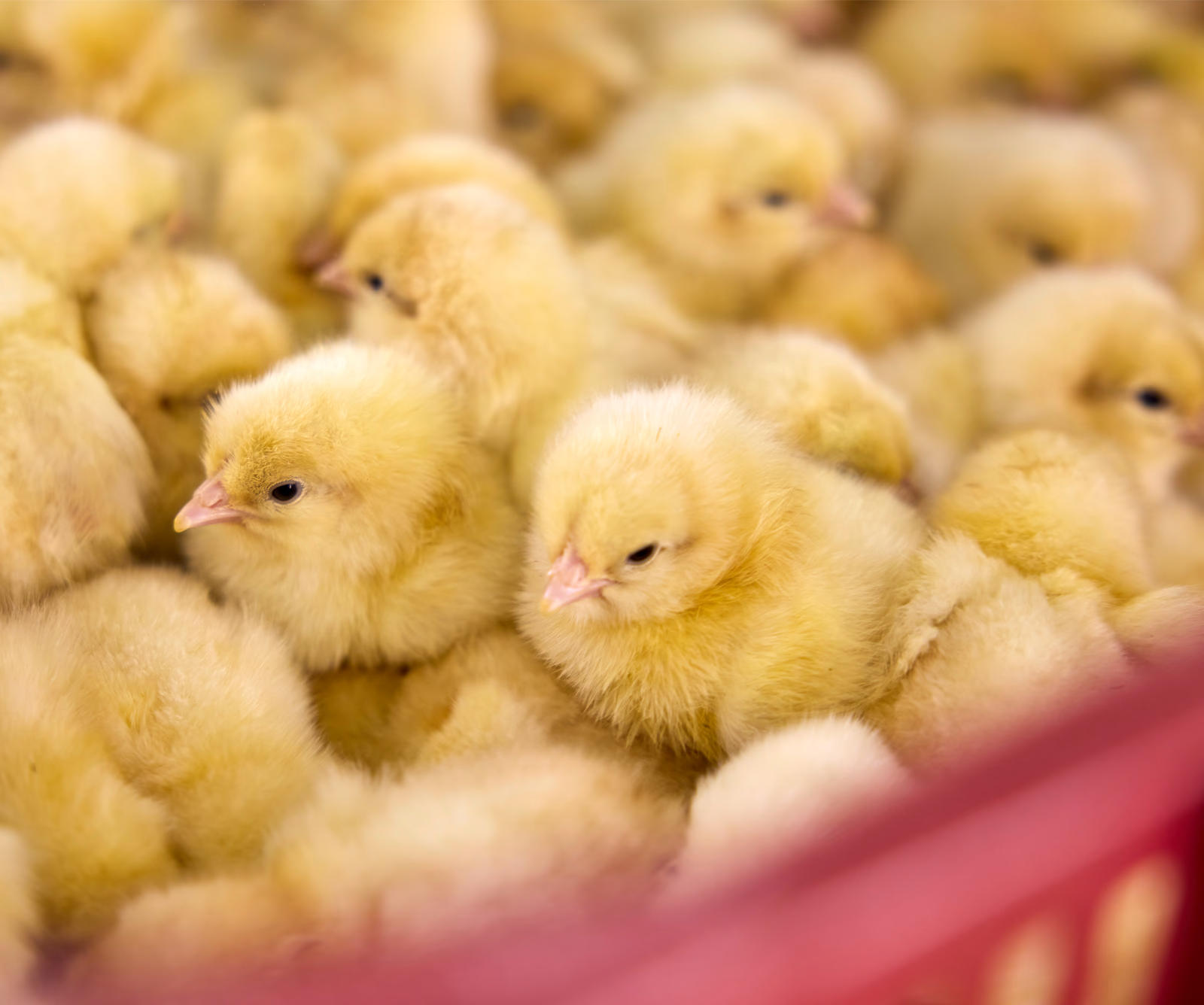
We also notice improved biosecurity, generally better production results, and increased production capacity. Importantly, chick quality has increased. Most of the chicks in a basket are in peak condition. We see a more uniform and shorter hatch window as well as lower mortality rates in the rearing houses.
How has the implementation of in-ovo sexing affected your overall operational expenses?
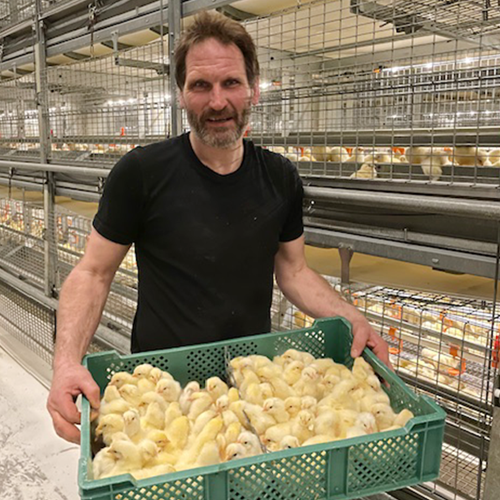
Sirevåg Hatchery operates with only one full‑time employee (FTE) compared to two FTEs in the previous hatchery. We use part‑time staff and bring in workforce from Salte’s companies when needed. During the first year of operation, quality and achieving the best possible production results have been prioritized over cost optimization.
Has the technology changed how you plan production volumes or forecast demand?
We have experienced substantial growth over the past 12 months. The old hatchery was consistently overbooked, and even the new hatchery would have reached full capacity without the implementation of in‑ovo sexing.
The in‑ovo technology allows us to unlock additional capacity in both the setters and hatchers, making it possible to perform larger hatches in a single day. That is a key operational advantage for us.
We operate two additional large rearing houses located about 1,000 km from the hatchery, with a capacity of approximately 64,000 chicks each. Thanks to in‑ovo sexing, we can now hatch all these chicks in one day and transport them together to central Norway, improving efficiency and logistics.
Furthermore, the technology plays a crucial role in our overall performance. With Norway transitioning to 100% in-ovo sexed eggs, so are we.
How would you describe the reliability and accuracy of the Genus Focus in daily operations?
From the very beginning, the system’s accuracy and consistency have been excellent, and due to constant software updates, processing speed has improved by nearly 10%.
The last ten hatches averaged only 0.5% male chicks in hatch. The most recent hatch, with 50,000 females, recorded only 0.25% males.
What does the support and partnership with the Genus Focus team look like in practice?
The partnership with Orbem has been excellent. From the very beginning, they have been actively involved, joining meetings with key stakeholders in Norway and showing genuine interest in our ongoing operations and production results.
We share all production data with Orbem so they can learn from it and use the insights to further improve their technology. Their service line is open 24/7, and we are extremely satisfied with the support and responsiveness from everyone on their team.
Did you have to bring other supply chain partners on board? If so, how did you do it?
We had an opening party in the hatchery for all stakeholders in the Norwegian market.
We have hosted meetings with each of the major grocery chains and leading egg brands and packing stations at our hatchery to demonstrate the solution and highlight its animal welfare advantages.
All Dekalb rearers fully support our in‑ovo strategy, which is crucial as they focus on increasing the share of in‑ovo‑sexed birds in their flocks in their dialogue with the egg producers. Equally important, all our employees, from the hatchery manager to our truck drivers, are committed to this strategy. Their engagement and understanding are key to expanding the in‑ovo share across our operations.
Norway is close to adopting in-ovo sexing for all eggs. How far ahead of that transition are you, and how has that felt competitively?
In addition to Nortura, at least two other egg brands and packing stations have already implemented 100% in‑ovo sexing, and we expect full adoption across the Norwegian market within the next 18 months.
We believe this strengthens our competitiveness, as the scalability and reliability of the Genus Focus system have been excellent.
Do you see 'in-ovo sexed' becoming a consumer label or quality signal in your market, similar to free-range or organic? Can you explain how retail has promoted and marketed in-ovo sexing so far?
Nortura presents in‑ovo sexing as an important animal‑welfare improvement, eliminating the need to hatch unwanted male chicks. They frame the technology as part of their broader sustainability strategy, aligned with their responsibility as a farmer‑owned cooperative. Nortura communicates that in‑ovo sexing supports a more ethical and future‑oriented egg production system. They use their strong market position and relationships with grocery chains to promote in‑ovo eggs as the new standard.
Nortura's premium brand, Prior, has a special label for in-ovo sexed eggs.
What would you say to hatcheries in other markets that are watching regulatory changes and sitting on the fence?
For hatcheries weighing up the investment, we can share our own experience: We invested 43M NOK (approximately 4M EUR) into our operations, and in-ovo sexing with the Genus Focus has been crucial in establishing profitability. The system is reliable, scalable, and highly labor‑efficient, enabling a sustainable business model from the start.
We have found a path to profitability in the Norwegian market through in‑ovo sexing, and we hope that other hatcheries will also discover their own ways to achieve higher profitability by adopting this technology.
Christoffer, if you had to sum up the impact of the Genus Focus on your business in one sentence, what would you say?
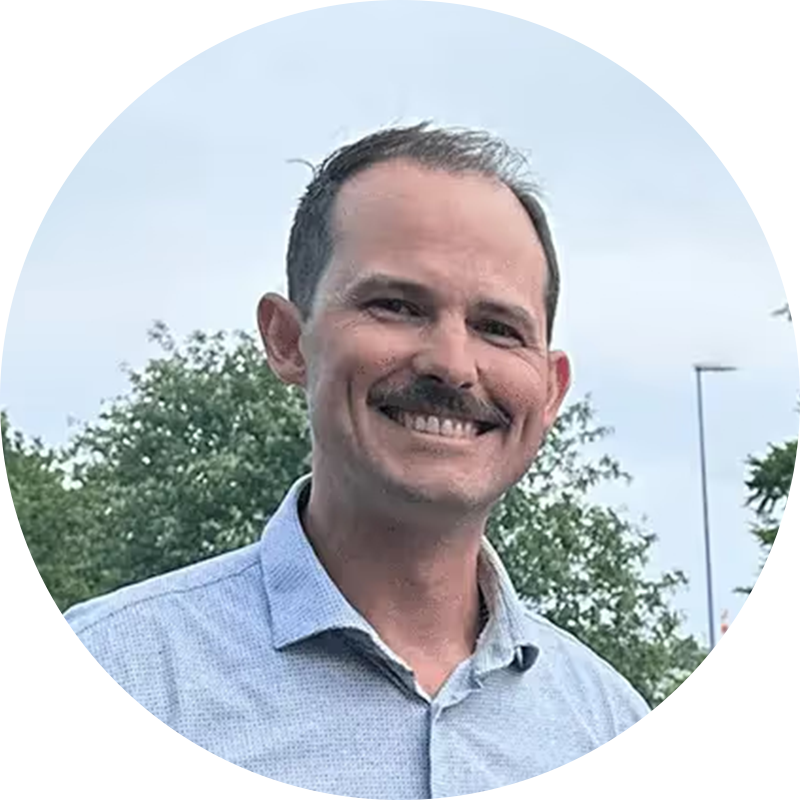
“The Genus Focus technology and in‑ovo sexing have been essential in enabling us to build a modern, efficient, and profitable hatchery.”
The Genus Focus is a product developed in collaboration with our partner, the Vencomatic Group.
About the Author

Barbara Jilek, Senior Press & Content Marketing Manager
Barbara secures media coverage, builds relationships with journalists, and loves telling Orbem’s story.